Ask ten importers what they expect when they buy resin from China and you will hear the same five sentences. They are repeated in RFQ templates, in forwarding-group chats and in procurement training decks, and most of them were true about some shipment, somewhere, once. The problem is that they get applied to every supplier and every grade. A buyer who treats POE, EVA, EVOH, PMMA and a tie-layer adhesive resin as one commodity will either over-specify and overpay, or under-specify and discover the difference on the production line. This article takes the five most persistent myths apart, and ends with the eight questions that are worth putting in your first inquiry instead.
Why these myths survive
None of the five appeared out of nowhere. They are shortcuts that buyers developed to cope with three real difficulties: a huge number of nearly identical grade names, documentation that arrives in several languages and formats, and a long chain between the reactor and the receiver's warehouse. A shortcut is useful until it replaces the check. Resin is sold at grade level, documented at lot level and qualified at part level — three different layers that get collapsed into a single "China resin" label. If you have not yet sorted out the abbreviations, our resin abbreviation guide is a useful starting point; if you need the document hierarchy, How to Read a TDS and COA goes through it line by line.
Myth 1: "It is all the same generic material"
This is the most expensive myth because it changes what buyers ask for. A polymer family is not a grade. Within EVA, the vinyl acetate content and melt flow rate decide polarity, crystallinity, flexibility and adhesion, so a foam grade and an adhesive-film grade are not interchangeable even though both are called EVA. Within POE, the comonomer and density decide whether the material behaves as an impact modifier, a compatibiliser or a film-layer resin. Within EVOH, ethylene content moves the balance between barrier performance and processability. PMMA grades differ in flow and heat resistance, and a tie-layer resin is specified by what it has to bond to, not by its family name.
The practical consequence: an RFQ that says "EVA, any grade, best price" is not a request for a quote, it is a request for a guess. Ask for the grade designation, the property values you must hold and the test methods behind them. Our EVA grade selection guide, POE selection guide and EVOH ethylene content explainer each show which variable actually separates the grades in that family. You can also scan the full property table to see what is published for the grades currently listed.
A related confusion is the family-versus-part mistake: COC and COP are not the same label, and a co-extruded film structure is not a resin at all. We separated those in COC vs. COP and in the EVA / POE / EPE encapsulant comparison. If a supplier's offer cannot name the grade, expect the same ambiguity to show up later in the COA.
Myth 2: "A COA is the same thing as a TDS"
A technical data sheet describes what a grade is designed to deliver: typical values, test methods, conditioning, processing guidance and the limits of the data. A certificate of analysis describes what a particular lot was actually measured to contain, usually against a narrower set of agreed items. Both are legitimate documents, and neither substitutes for the other.
The failure mode is familiar. A buyer receives a COA showing a melt flow value inside tolerance and assumes the rest of the grade's behaviour — adhesion, haze, barrier, heat resistance — is therefore confirmed. It is not. The COA may list three items; the design may depend on nine. Conversely, a TDS is a typical-value document, not a lot certificate: it tells you what to qualify, not that your specific pallets were tested. Ask for both, in the same language you use internally, and check that the test method on the COA matches the one on the TDS. A value without a method is not a specification, it is a number.
This distinction is also why we publish property values as HTML tables on product pages with the test method beside each figure, and why we do not hide them behind a form. If you are comparing two offers, put the documents side by side and compare method, condition and unit — not just the headline figure.
Myth 3: "The lowest price per kilo is the lowest landed cost"
Price per kilo is the easiest number to compare and the least complete. What actually reaches your line is a landed, qualified cost: the resin, the packaging it arrives in, the freight and handling, the duties and clearance, the quantity you had to commit to, the inventory you carry, and the cost of proving the material works.
Consider two offers for the same nominal grade. One is cheaper but only available at a minimum order quantity that ties up a season of working capital and requires repacking on arrival. The other arrives in the bag size your line already handles, with a lot-specific COA and a documented grade history. If the cheaper lot forces a trial run, a drying-step change or a scrap allowance, the difference disappears quickly — and it disappears again at every future change of supply.
Then there is qualification cost. Changing a supplier in a multilayer film, an optical part or a medical-adjacent application is not a purchase-order edit; it is a validation project. We wrote about MOQ, samples and freight mechanics in Sourcing Polymer Pellets from China. The useful comparison unit is the cost of a qualified kilogram at your line, not the cost of an unqualified kilogram at a port.
A simple rule: never compare two quotes until both name the same grade, the same test methods, the same packaging, the same quantity and the same delivery term. If one of them cannot, the price is not yet a price.
Myth 4: "Any supplier can just send the official manufacturer datasheet"
This myth causes more friction than any other, because both sides think they are being reasonable. Manufacturer datasheets are copyrighted technical documents. A trading or distribution partner can share published typical values, and can pass along the current official datasheet for a grade it supplies, but it cannot republish, reformat or host every manufacturer's PDF as if it were its own catalogue. That is why the "TDS" button on a well-built product page should open a request form, not a download link.
The distinction matters to you as a buyer for two reasons. First, an untraceable PDF circulating in an email thread may be years out of date, and you have no way to tell which revision you are designing against. Second, a supplier who is relaxed about document provenance is usually relaxed about data provenance too. Ask where the values came from, which revision the datasheet is, and whether the document can be requested for the exact grade you are buying.
Our own approach is documented on the data sources and TDS request policy page: published property values are shown openly in HTML with their test methods, the official document is obtained through a station-side request with the grade pre-filled, and manufacturer PDFs are not hosted or reproduced on this site. Every product page has a request link that carries the grade designation, so the request is about one specific material rather than "your catalogue please".
Myth 5: "Documentation and traceability are optional extras"
Some buyers treat paperwork as something to negotiate after the price is agreed. In practice, the documents define what you bought. Bag marking, lot number, production date, the COA for that lot, the revision of the TDS, and the packaging specification are how a receiving team decides whether a shipment matches the order and how a quality team investigates a deviation six months later.
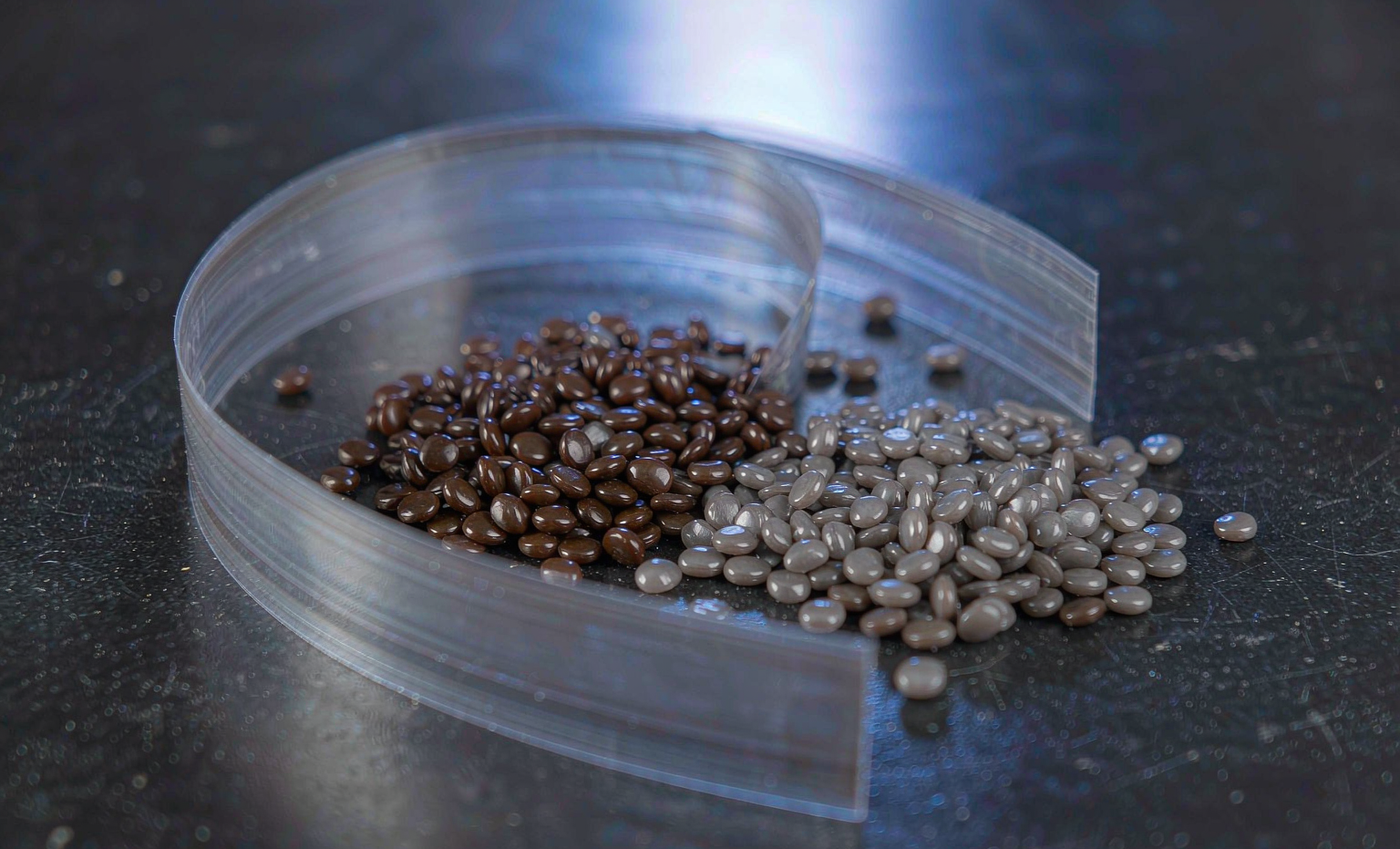
None of this requires exotic systems. It requires that the supplier answers consistently. If the grade name on the bag, the COA and the invoice differ, you do not have three documents — you have an open question. If the supplier cannot say which test method produced a value, the value cannot be compared. And if a photograph of pellets is being used as "proof" of a grade, that is a category error: pellet appearance does not identify a polymer, a maker or a specification. Our pellet photo gallery says exactly that on the page, even though the images are real photographs from stock.
The reverse myth also exists: that a long document pack means a good supplier. It does not. A short, correct, internally consistent pack beats a thick one with three different grade names in it. Ask for the specific documents your quality system requires, agree on the format before the PO, and make the COA a release condition rather than an attachment someone files later.
The first-RFQ checklist: eight questions worth asking
These questions cost a few lines of email and remove most of the ambiguity that the five myths create. They are deliberately unglamorous.
| Ask this | Why it matters | A useful answer looks like |
|---|---|---|
| Which exact grade, and which revision of its datasheet? | Family names are not grades; revisions change values. | A full grade designation and a dated document. |
| Which properties must hold, under which test methods? | Values without methods cannot be compared. | Method plus condition beside each figure. |
| Will we receive a lot-specific COA, and for which items? | Separates a typical-value sheet from a lot record. | Named items tied to a lot number. |
| What is the MOQ, the bag size and the packaging spec? | Drives working capital, handling and storage. | One consistent packing description across documents. |
| Which delivery term is the quote based on? | A per-kilo price is meaningless without the term. | A named term and named location. |
| Can we get a sample from the same grade before the PO? | Qualification should precede commitment. | A sample request with the grade pre-filled. |
| How are lot numbers and bag markings recorded? | This is what a future deviation investigation runs on. | A plain description of the marking and the record. |
| Who answers a technical question after the shipment lands? | Reveals whether you are buying from a desk or a partner. | A named channel and a realistic response expectation. |
Eight questions, one email. If the reply is a single price with "same as before" in the subject line, you have learned something useful before any money moves.
What a good first inquiry actually looks like
Here is the shape of a first message that gets a real answer. It is short, it names the material, and it says what the material has to do:
"We are evaluating a POE grade for impact modification in a TPO compound. Target: consistent melt flow for our existing compounding line, with the current TDS and a lot-specific COA for a sample before any PO. Please quote for [quantity] on [delivery term], state the MOQ and bag size, and confirm which test methods the published values use. Our QC will need the grade designation on both the COA and the bag marking."
Notice what is missing: no demand for the cheapest price, no request for "all your catalogues", and no assumption that a photograph or a family name identifies the material. It gives a supplier enough to propose a grade and enough to be held to. For a deeper comparison of elastomer families, see TPU vs TPE vs TPV and POE vs EPDM; for adhesive-layer selection, see EAA and EMAA adhesive resins and PMMA grade selection.
Where the myths actually come from
Most of them are translation problems, not integrity problems. "Grade" is used loosely across languages. "Typical value" is sometimes read as "guaranteed value". "Equivalent grade" is used to mean both "same chemistry" and "will run on your line without change", which are very different claims. Add a forwarding chain in which the original document is separated from the offer, and a buyer ends up comparing a price, a photo and an abbreviation.
The fix is not more suspicion; it is more precision. Name the grade. Attach the method. Ask for the lot record. Agree on the term. Those four habits dissolve all five myths, and they work with suppliers in any country.
Myth vs reality, in one table
| The myth | The working reality |
|---|---|
| All resin from one country is one commodity. | Material is bought at grade level; families are not grades. |
| A COA proves the whole specification. | A COA covers the measured items on one lot; a TDS describes the grade. |
| Cheapest per kilo wins. | Qualified landed cost includes MOQ, packaging, freight and validation. |
| Any seller can host the official PDF. | Manufacturer documents are copyrighted; request the current revision for your grade. |
| Paperwork can be sorted out later. | Lot records and markings define what you actually received. |
Frequently asked questions
Is an "equivalent grade" safe to substitute?
Only after qualification. Equivalence claims usually refer to a property range, not to processing behaviour, adhesion, barrier performance or regulatory documentation. Treat the proposed grade as a new material until your own trial says otherwise.
Which document should I ask for first?
The current TDS for the exact grade, followed by a lot-specific COA for the material you would actually receive. Ask which test methods were used in both, and confirm they match.
Why do some suppliers publish property values as web tables instead of PDFs?
Because published typical values can be shown openly with their methods, while the official manufacturer datasheet remains a copyrighted document that should be requested for the specific grade. Tables are also easier for a buyer — and for a search engine — to compare. See our data sources and TDS policy.
Can a pellet photograph confirm a grade?
No. Pellet shape, size and colour do not identify a polymer or a manufacturer. Photos are useful for seeing the physical form of a shipment, not for specification. Our photo gallery states this explicitly.
What should I do before switching suppliers on an existing part?
Freeze the current grade's method-and-value list, request a sample from the proposed grade with a lot COA, run your normal qualification trials, and only then discuss volume pricing. Skipping the trial is where the "cheapest kilogram" myth becomes an expensive one.
Related reading
- How to Read a TDS and COA (and Why Your QC Depends on It)
- Sourcing Polymer Pellets from China: MOQ, COA, Samples and Freight
- Resin Abbreviation Bingo: EVA, POE, OBC, TPU, TPE, TPV Decoded
- Solar Encapsulant Films: EVA vs POE vs EPE
- Full grade property table
Before the next purchase order
If you are comparing offers right now, send us the grade designation, the properties you must hold and the test methods you use. We will come back with a shortlist and the supporting documentation rather than a single number. Start an inquiry, or browse the product catalogue and the full property table first.
This article is general sourcing guidance, not a specification or warranty for any grade. Property values, test methods, documentation and compliance must be confirmed against the current official TDS and the lot-specific COA, and qualified on your own line before release to production.
Related Products
- Dow ENGAGE 8150 (POE elastomer)
- SK Chemical 3004 PRIMACOR (EAA)
- Kuraray E105B (EVOH)
- Dow Bynel 21E787 (tie-layer)
- Chang Chun EVASIN EV2951F (EVOH)
- Wanhua WANSUPER 5007 (POE)
About This Article
This guide is prepared by the POLYVALA technical team. All property values, test methods and compliance statements are drawn from manufacturer Technical Data Sheets (TDS) and recognized standards (ASTM, ISO). Figures must always be confirmed against the current official TDS and the lot-specific Certificate of Analysis (COA) before production qualification.
References
- Manufacturer Technical Data Sheets (TDS) for the grades referenced above.
- ASTM D1238 / ISO 1133 — Melt flow rate (MFR/MFR) of thermoplastics.
- ASTM D1505 / ISO 1183 — Density of plastics by the density-gradient technique.
- ASTM D638 — Tensile properties of plastics.
About this article
Written by the technical team at Shanghai Polyvala Plastics, a sourcing and compounding partner for specialty polymer buyers since 2013. We check grades against manufacturer TDS and lot-specific COA rather than marketing claims. Questions about a grade or an equivalent? Request the TDS and COA, or contact our application engineers for a line-specific recommendation.
Related reading: How to Read a Third-Party Polymer Test Report — the five fields to verify on a RoHS, REACH, PAHs or phthalates report.