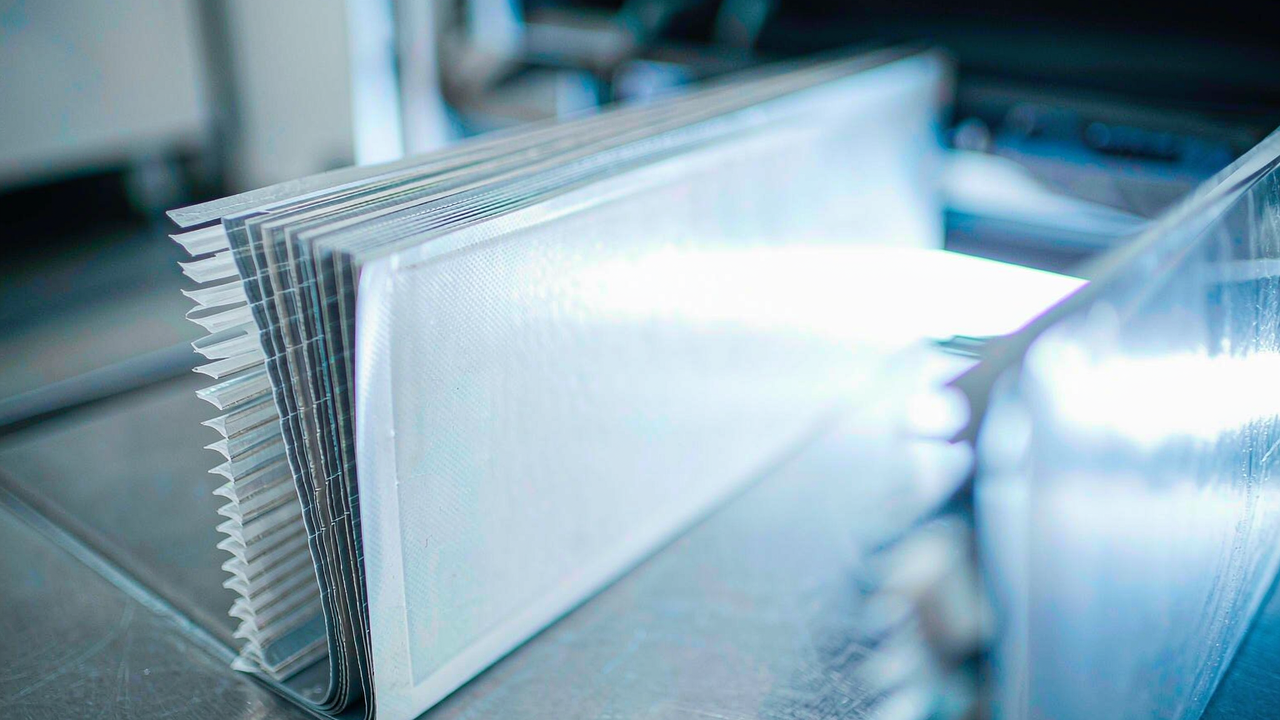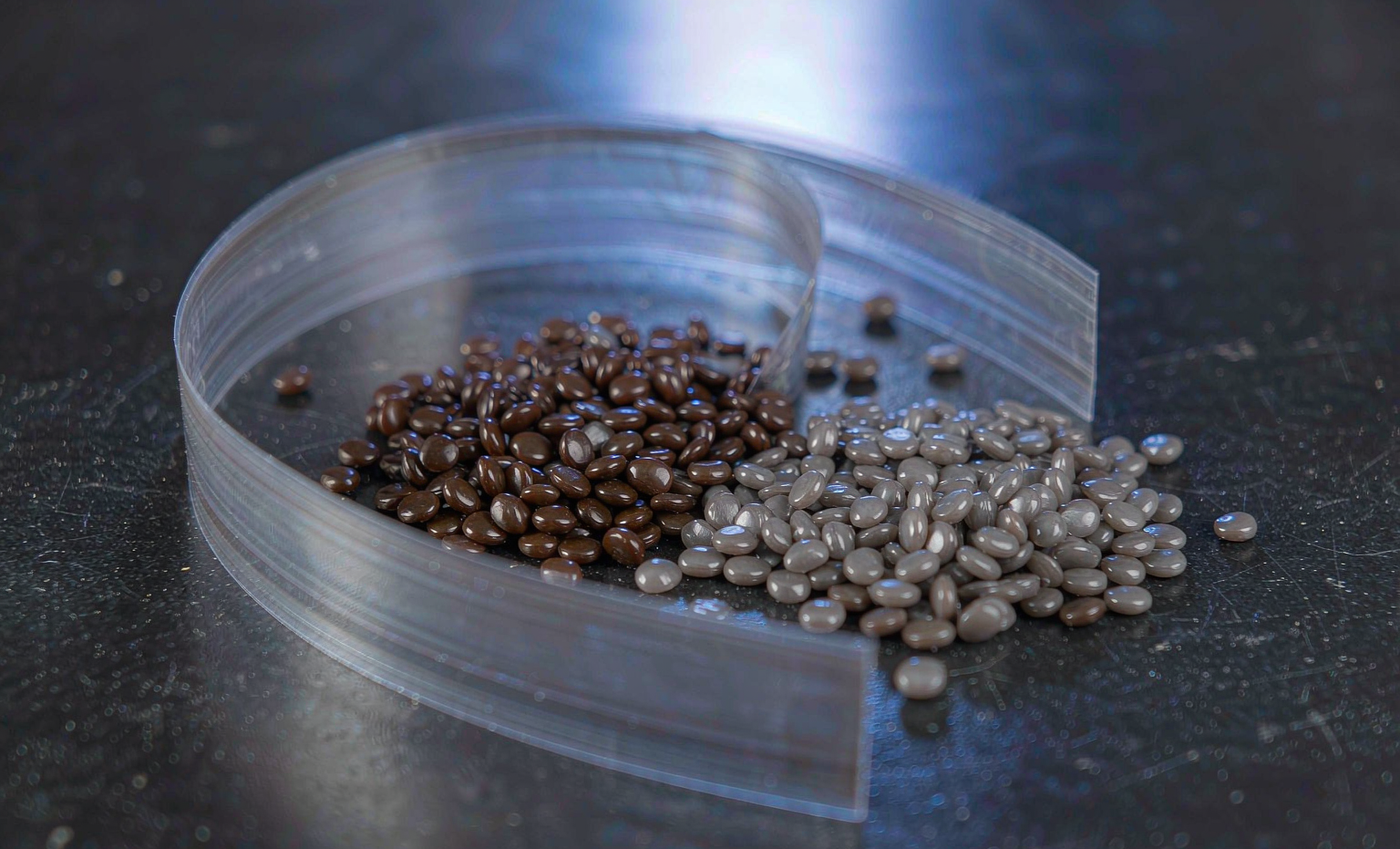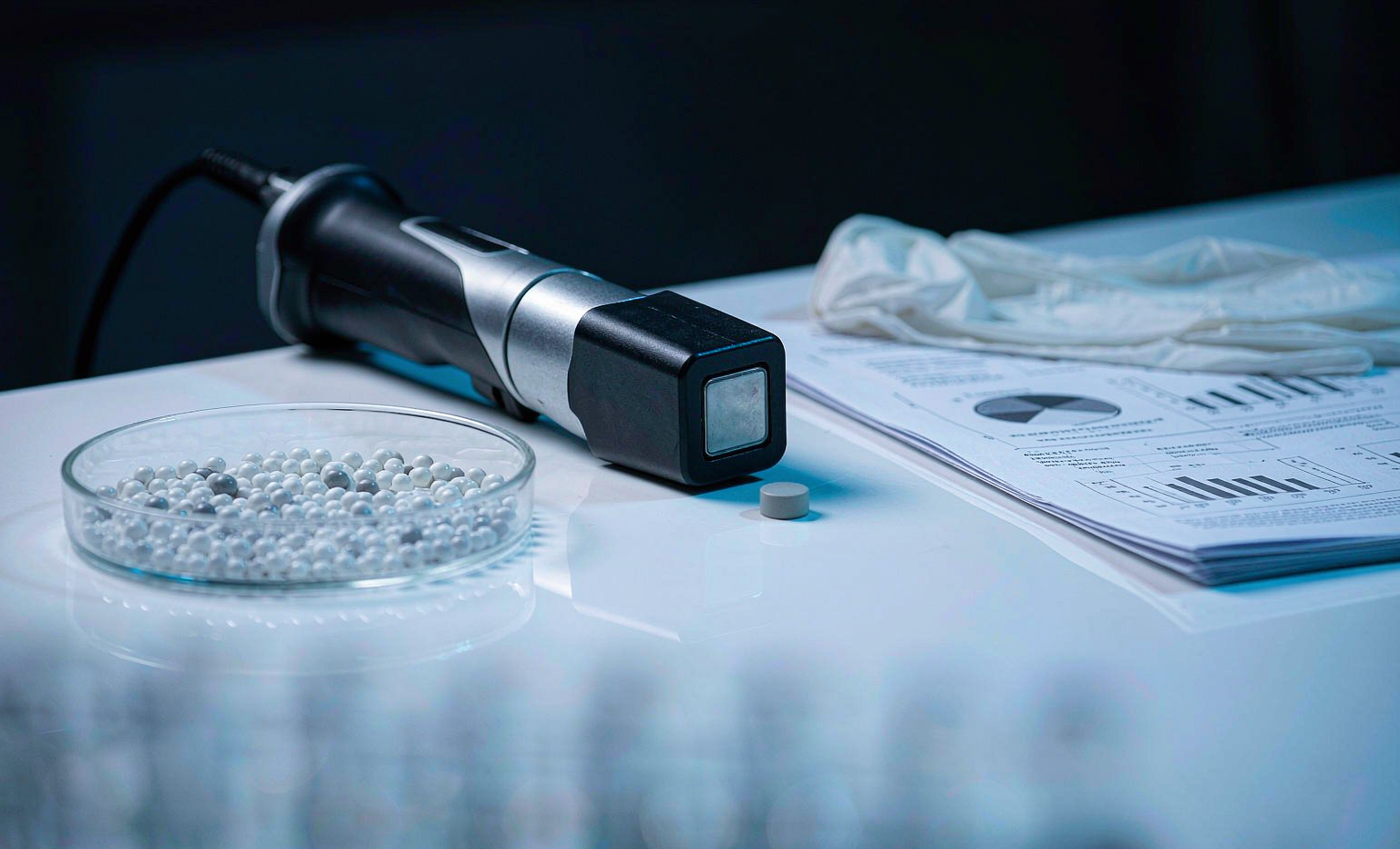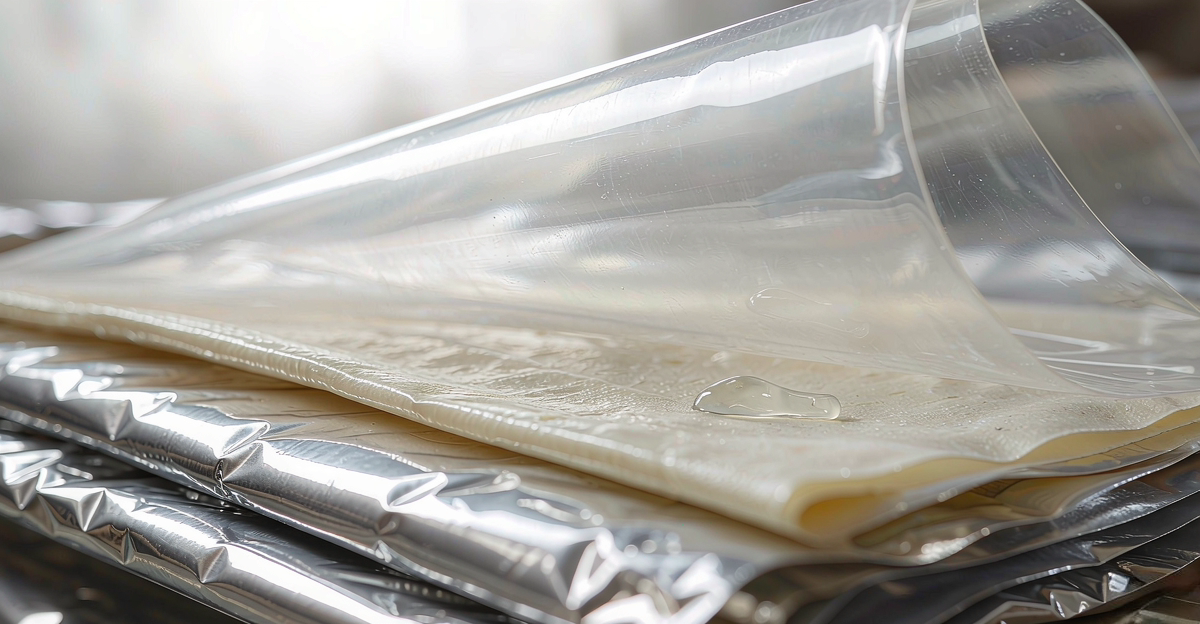
Every multilayer package has a weak point that nobody sees: the interface. A film can have a perfect barrier layer and a beautiful print surface, yet delaminate in the customer’s hands because two dissimilar polymers refuse to stick. That is the job of EAA and EMAA — ethylene-acrylic acid and ethylene-methacrylic acid copolymers. They are rarely the headline material on a spec sheet, but they are the reason foil laminates stay bonded, the reason a PE/PA film survives a retort cycle, and the reason an extrusion-coated paper cup does not peel at the rim. This guide explains what these adhesive resins actually do, how to choose between them, and what to check before you buy.
What EAA and EMAA are
Both are random copolymers of ethylene with a small amount of an acid comonomer — acrylic acid (AA) for EAA, methacrylic acid (MAA) for EMAA. The polyethylene backbone supplies toughness, flexibility and water resistance; the acid groups supply polarity. That polarity is the whole point: it lets the resin form strong secondary bonds (hydrogen bonds and, at higher temperatures, ester linkages) with polar substrates such as aluminium foil, steel, paper, polyamide (PA) and PET, which plain PE or PP will simply slide off.
Acid content typically runs from about 4% to 20% by weight. More acid means more polarity, stronger adhesion and better low-temperature sealing — but also lower crystallinity, a softer resin, and a higher price. A partially neutralised acid copolymer becomes an ionomer (the Surlyn family), where metal ions cross-link the acid groups and add abrasion resistance, clarity and “seal-through-contamination” behaviour.
Why acid copolymers bond when PE does not
- To aluminium foil — the acid groups react with the oxide layer on the foil, giving a bond that survives deep drawing and retort. This is the classic foil-lamination use case.
- To paper and board — extrusion-coated paper cups, boxes and food wraps rely on EAA/EMAA as the tie between board and PE.
- To PA and PET — in multilayer blown film and laminates, the acid copolymer acts as the tie layer between a polar barrier and a non-polar sealant.
- To steel and metal — powder and extrusion coatings for pipe, tube and industrial parts.
Reading the grade: acid content and MFR
Two numbers decide almost everything. Acid content sets adhesion and seal behaviour; melt flow rate (MFR) sets processability and line speed. A high-acid, low-MFR grade gives the strongest bond and best toughness for demanding laminates; a high-MFR grade flows easily for thin coatings and high-speed extrusion. The table below maps the common bands:
- Low acid, ~6–7% (e.g. EAA 5000, 6000) — general extrusion coating, paper and board, good clarity and low odour.
- Mid acid, ~9–10% (e.g. EAA 5020, 5080, and the 5050 line, now specified as Exxtra 8409) — the workhorses for foil lamination and multilayer packaging, balancing bond strength and processing.
- High acid, ~15–20% (e.g. EAA 5200, 5980I, 5990I) — maximum adhesion and low-temperature sealing for difficult substrates and high-speed lines.
- EMAA and ionomers (Nucrel, Surlyn) — where you need heat resistance, abrasion resistance, clarity or seal-through-contamination, not just raw bond strength.
EAA vs EMAA vs ionomer: which one?
- Choose EAA when the priority is the strongest possible bond to foil or metal at the lowest cost, and the structure will not see aggressive heat or abrasion.
- Choose EMAA when you need a better balance of adhesion, heat resistance and toughness — EMAA generally holds up better at higher service temperatures and in retort or hot-fill conditions.
- Choose an ionomer when the application demands abrasion resistance, high clarity, or sealing through contamination (powder, grease, liquid) — skin packaging, golf-ball covers and tough surface films are classic ionomer territory.
Processing notes that save a production run
Acid copolymers are hygroscopic and can pick up moisture; dry them before high-temperature extrusion if the line is sensitive. Adhesion to foil is best when the melt is hot enough to wet the oxide surface but not so hot that the acid degrades — follow the supplier’s melt-temperature window rather than pushing the extruder. Corona treatment helps on non-polar substrates, but on foil the acid chemistry usually does the work. For retort structures, check the bond after the full sterilisation cycle, not just off the line.
Sourcing acid copolymers from China
China now offers both imported brand grades (ExxonMobil Exxtra and the former Escor line, Dow Nucrel and Surlyn, SK PRIMACOR) and a growing set of domestic equivalents. When you issue an RFQ, specify the acid type and content, MFR, density, target substrate, and any food-contact or retort requirement — a vague “EAA” request will get you a price list, not a solution. Ask for the TDS and a per-batch COA, and confirm the packaging, because brand migrations happen: ExxonMobil’s EAA family has moved from the Escor name to Exxtra, and grade 5050 is now supplied as Exxtra 8409 with updated packaging. If your old spec sheet still says 5050, update it before the next order.
Bottom line
EAA and EMAA are the adhesives that hold modern flexible packaging together. Match the acid content to the substrate, the MFR to your line speed, and the chemistry (acid copolymer vs ionomer) to the service conditions — then verify the bond after the real-world cycle, not just the lab. Do that, and the invisible interface stops being the weak point.
About This Article
This guide is prepared by the POLYVALA technical team. All property values, test methods and compliance statements are drawn from manufacturer Technical Data Sheets (TDS) and recognized standards (ASTM, ISO). Figures must always be confirmed against the current official TDS and the lot-specific Certificate of Analysis (COA) before production qualification.
References
- Manufacturer Technical Data Sheets (TDS) for the grades referenced above.
- ASTM D1238 / ISO 1133 — Melt flow rate (MFR/MFR) of thermoplastics.
- ASTM D1505 / ISO 1183 — Density of plastics by the density-gradient technique.
- ASTM D638 — Tensile properties of plastics.
Related reading
For a grade-by-grade comparison of the three main adhesive chemistries, see our guide: Tie-Layer Compound Selection: PE-g-MAH vs PP-g-MAH vs EAA.
See also: Bondine vs Bynel vs Primacor vs Igetabond: A Tie-Layer Brand Cross-Reference — a four-brand tie-layer cross-reference.
Application case studies
Related reading: EMA vs EBA Grade Map: LOTRYL and Exxtra Resins by MFR — how methyl and butyl acrylate copolymers differ, with a grade map by melt flow.