Acrylic resin — polymethyl methacrylate, almost always written as PMMA — is the clear engineering plastic that most people mean when they say "perspex", "plexiglas" or simply "acrylic". It delivers glass-like optical clarity with roughly half the weight, and unlike polycarbonate it stays clear outdoors for years without yellowing. For buyers specifying transparent or light-diffusing parts, PMMA is usually the first material you reach for: signage, lighting, automotive lenses, sanitaryware and medical devices all lean on it.
What acrylic (PMMA) actually is
PMMA is a rigid, amorphous thermoplastic made from methyl methacrylate monomer. Its chain is naturally transparent because the repeat unit does not absorb visible light, so a well-made acrylic part transmits 92% of visible light — higher than glass. Two production routes define the grades you will meet:
- Cast acrylic (cell-cast sheet): highest clarity and thermal stability, best for machining, bonding and thick sections.
- Extruded acrylic (and moulding/compound pellet): lower cost, tighter thickness tolerance, and the form compounders buy as pellet for injection moulding and extrusion.
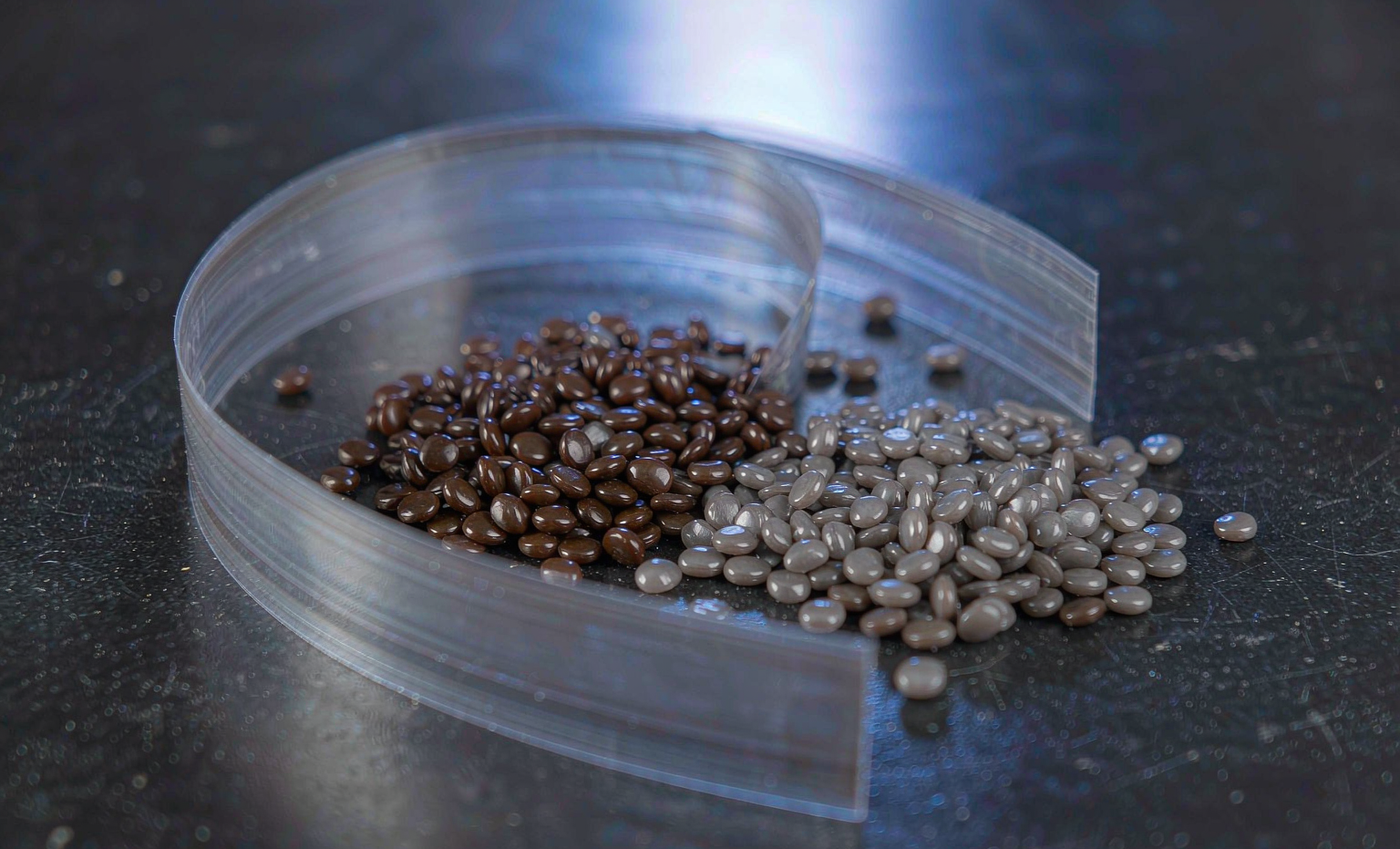
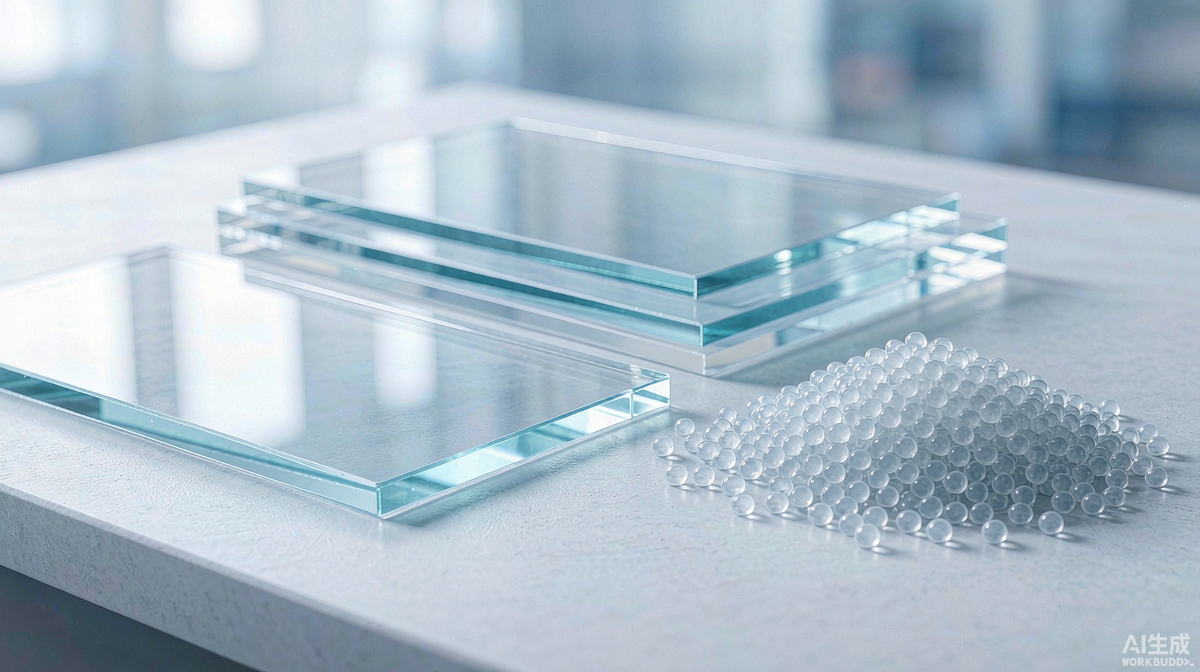
When we talk about "acrylic resin" on this site we mean the pellet grade — the raw material converters melt into sheet, profiles, lenses and moulded parts — not the finished sheet.
General-purpose vs. impact-modified
The single biggest fork in any acrylic selection is whether the grade is neat PMMA or impact-modified (usually a PMMA matrix with a rubber or acrylic-ester elastomer dispersed in it):
- General-purpose PMMA: maximum clarity and hardness, but it can craze or crack under sharp impact. Best where rigidity and optics dominate.
- Impact-modified PMMA: trades a few points of light transmission for dramatically better resistance to dropping, screwing and snap-fit stress. The right call for enclosures, housings and outdoor clips.
Specifying "acrylic" without saying which of these you need is the most common way a first sample comes back wrong.
The numbers buyers actually specify
Start from these parameters rather than a trade name:
- Melt flow rate (MFR, g/10 min): sets process fit. Low MFR (1–4) for extrusion and thick sections; mid (4–12) for general injection; higher (12–25) for thin-wall, fast-cycle or multi-cavity tools.
- Light transmission & haze: GP grades hit 91–92% transmission with <1% haze. Light-diffusing grades are tuned the other way — higher haze, controlled transmission — for LED panels and luminaires.
- Vicat softening / heat-deflection temperature: standard PMMA sits around 95–105°C; heat-resistant (co-polymer) grades push higher for automotive and appliance use.
- Weathering / UV stability: PMMA is inherently UV-stable; UV-absorbing variants are used where the part sits in direct sun for a decade.
Where acrylic grades get used
- Signage & display: the classic application — clear and coloured sheet, edge-lit signs, POS displays.
- Lighting & LED: light guides and diffusers; here haze and transmission are tuned per luminaire.
- Automotive: tail-light lenses, interior trim and instrument covers where clarity plus impact resistance matter.
- Sanitaryware & bath: whirlpool shells and vanity basins, often cast or thermoformed from GP/impact-modified blends.
- Medical & lab: clear housings and fluid-path components where optical clarity and cleanliness beat impact.
How to select an acrylic grade
Work top-down: (1) pick the process first — can your tool melt and fill with this MFR? (2) decide clarity vs. impact — GP if optics rule, impact-modified if the part will be handled or dropped; (3) set the thermal and weathering window from the end use; (4) confirm colour and any food/medical compliance. A grade perfect for a light-diffuser lens is usually wrong for a machined medical housing.
Sourcing acrylic through POLYVALA
POLYVALA stocks and sources the major acrylic (PMMA) families — general-purpose, impact-modified and light-diffusing grades — across the MFR and property windows these applications need. If you know the process and the target clarity, hardness or heat resistance but not the exact grade, send us the window and we will match a stocked or equivalent grade, with COA and samples before any volume commitment.
For the broader buying context, see our guide on sourcing polymer pellets from China, and for adjacent clear/resilient materials compare EVA grades and POE elastomers.
Related Products
About This Article
This guide is prepared by the POLYVALA technical team. All property values, test methods and compliance statements are drawn from manufacturer Technical Data Sheets (TDS) and recognized standards (ASTM, ISO). Figures must always be confirmed against the current official TDS and the lot-specific Certificate of Analysis (COA) before production qualification.
References
- Manufacturer Technical Data Sheets (TDS) for the grades referenced above.
- ASTM D1238 / ISO 1133 — Melt flow rate (MFR/MFR) of thermoplastics.
- ASTM D1505 / ISO 1183 — Density of plastics by the density-gradient technique.
- ASTM D638 — Tensile properties of plastics.
Related reading