Ethylene-vinyl acetate (EVA) is one of the most versatile commodity copolymers in the plastics trade — yet it is also one of the most mis-specified. Buyers routinely ask for “EVA” and expect a single material, when in reality EVA spans a family of grades whose properties swing dramatically with just two numbers: vinyl acetate (VA) content and melt flow rate (MFR). For converters making solar encapsulant film, crosslinked foam, hot-melt adhesive, or wire-and-cable jacketing, picking the wrong VA band is the difference between a part that performs for 25 years and one that fails in a season. This guide explains how EVA is built, what the grade numbers mean, and how to choose the right grade for your process and application.
What EVA actually is
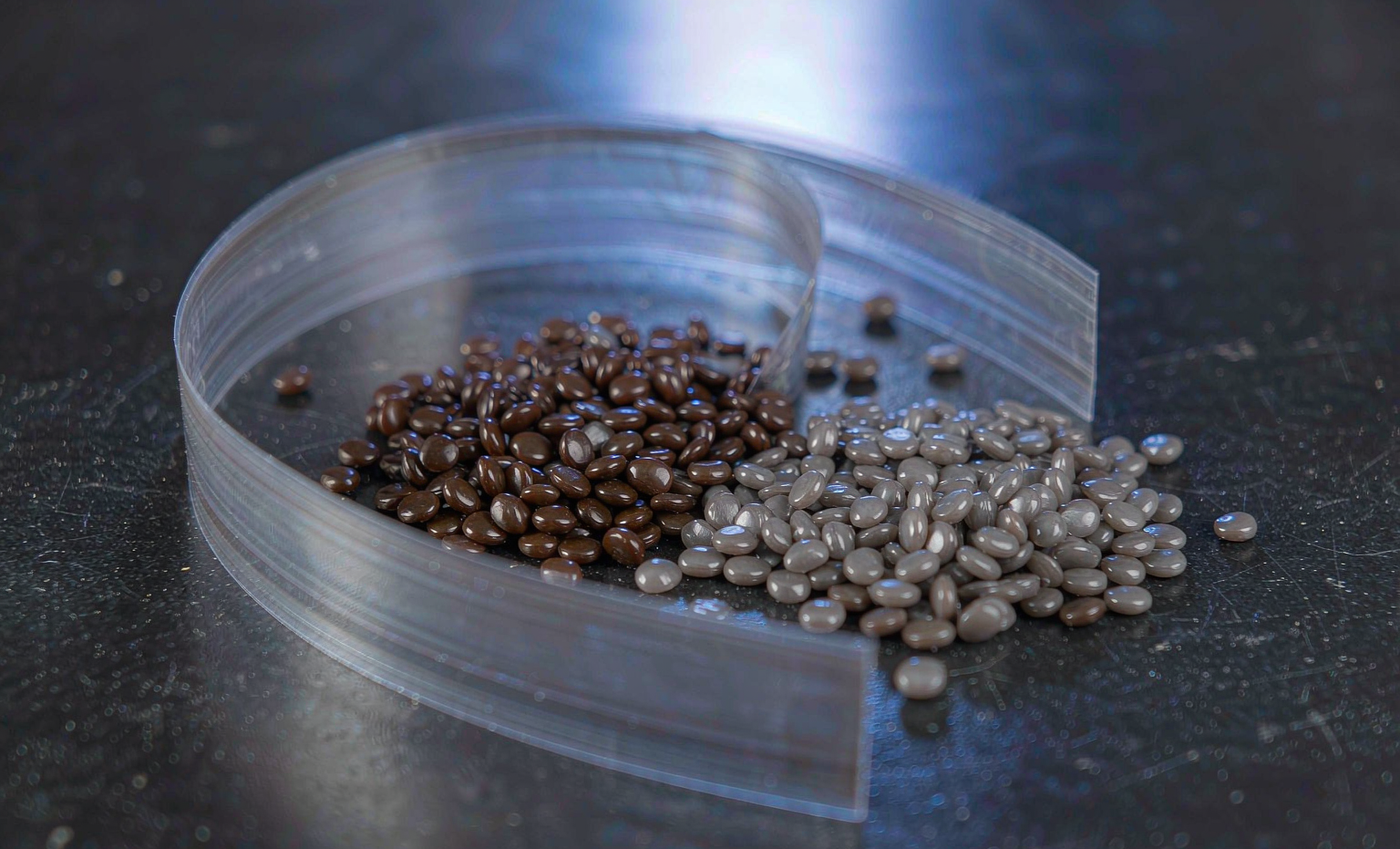
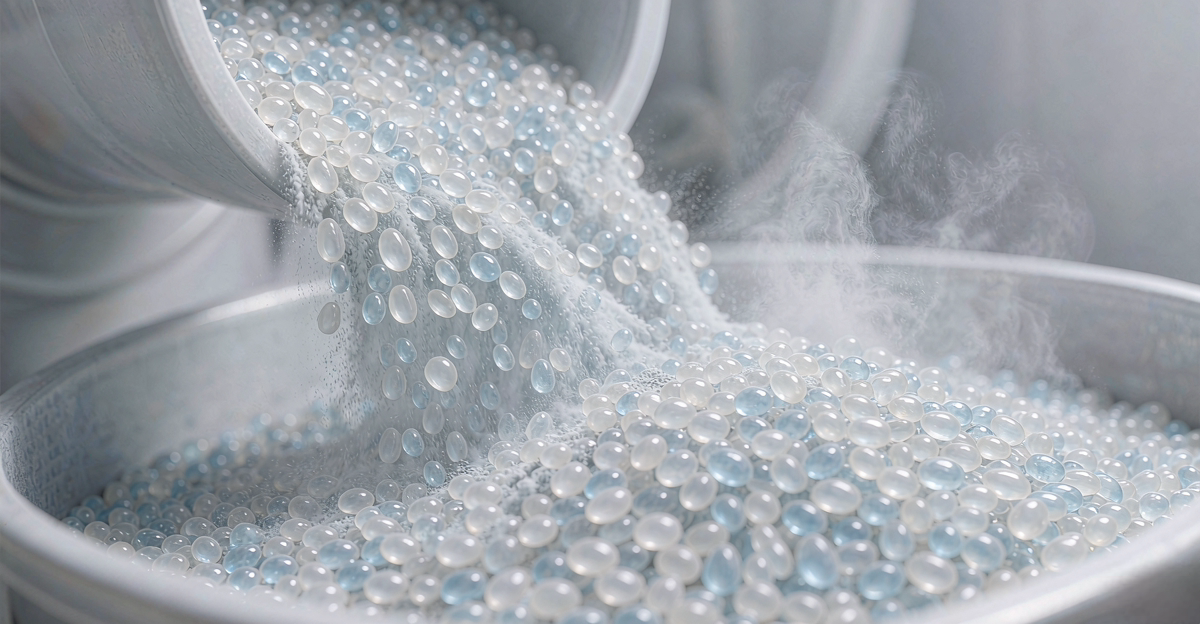
EVA is a random copolymer of ethylene and vinyl acetate, made by high-pressure, free-radical polymerization (the same reactor family as LDPE). The vinyl acetate is a “comonomer” that disrupts the polyethylene crystal lattice. As VA content rises, the chain packs less efficiently, so crystallinity falls and the material becomes softer, clearer, and more polar. At very low VA (≤5%) the resin behaves almost like a flexible polyethylene; at high VA (28–40%) it starts to resemble a rubbery, tacky thermoplastic. There is no crosslinking in the base resin — any crosslinked EVA foam or film is the result of a downstream peroxide, silane, or electron-beam step, not the polymer itself.
The two variables that define an EVA grade
On a typical EVA data sheet you will see many numbers, but for material selection only two drive almost everything: VA content and MFR (sometimes called MI, melt index).
- VA content (wt%) — the single biggest lever on polarity, flexibility, adhesion, and clarity. It typically ranges from 1% to 40% in commercial grades.
- MFR / MI (g/10 min, 190°C/2.16 kg) — a proxy for melt viscosity. Higher MFR means lower viscosity and easier flow at a given temperature; lower MFR means higher molecular weight, better mechanical strength, and slower throughput.
- Density (g/cm³) — rises almost linearly with VA (roughly 0.92 at low VA to ~0.96 at 28% VA), and is a useful cross-check when a supplier only quotes one number.
How VA content changes the material
The table below is the mental model every EVA buyer should keep. As VA goes up, certain properties improve for your application and others degrade — there is no “best” VA, only the right VA for the job.
- Flexibility & softness ↑ — lower modulus, better low-temperature toughness.
- Clarity & gloss ↑ — amorphous regions scatter less light.
- Polarity & adhesion ↑ — VA is the polar segment that lets EVA bond to polar substrates, metals, and polar polymers.
- Stress-crack resistance & impact ↑ at moderate levels.
- Crystallinity, melting point, stiffness ↓ — heat resistance drops, so high-VA grades are poor choices where the part sees sustained heat.
- Chemical & oil resistance ↓ — more acetate means more swelling in hydrocarbons.
Grade families by VA band
Suppliers rarely sell “EVA” in the abstract. They sell into VA bands, and each band maps to a cluster of applications:
- Low VA (1–10%) — agricultural film, stretch/cling film, extrusion coating, ice-bag and laminating film. Tough, heat-sealable, and cheap; used where you want PE-like processability with a little extra clarity and sealability.
- Medium VA (10–20%) — the workhorse for crosslinked foam (footwear, yoga mats, sports padding), wire-and-cable insulation, and some injection-molded flexible parts. This is the largest and most price-sensitive band in the trade.
- High VA (20–33%) — hot-melt adhesives, PVC impact modification, and solar PV encapsulant film (typically 28–33% VA for the right balance of encapsulation, adhesion to glass, and UV stability).
- Very high VA (33–40%) — specialty adhesives and wax-replacement compounds where tack and polarity dominate over strength.
Application deep-dive: solar PV encapsulant film
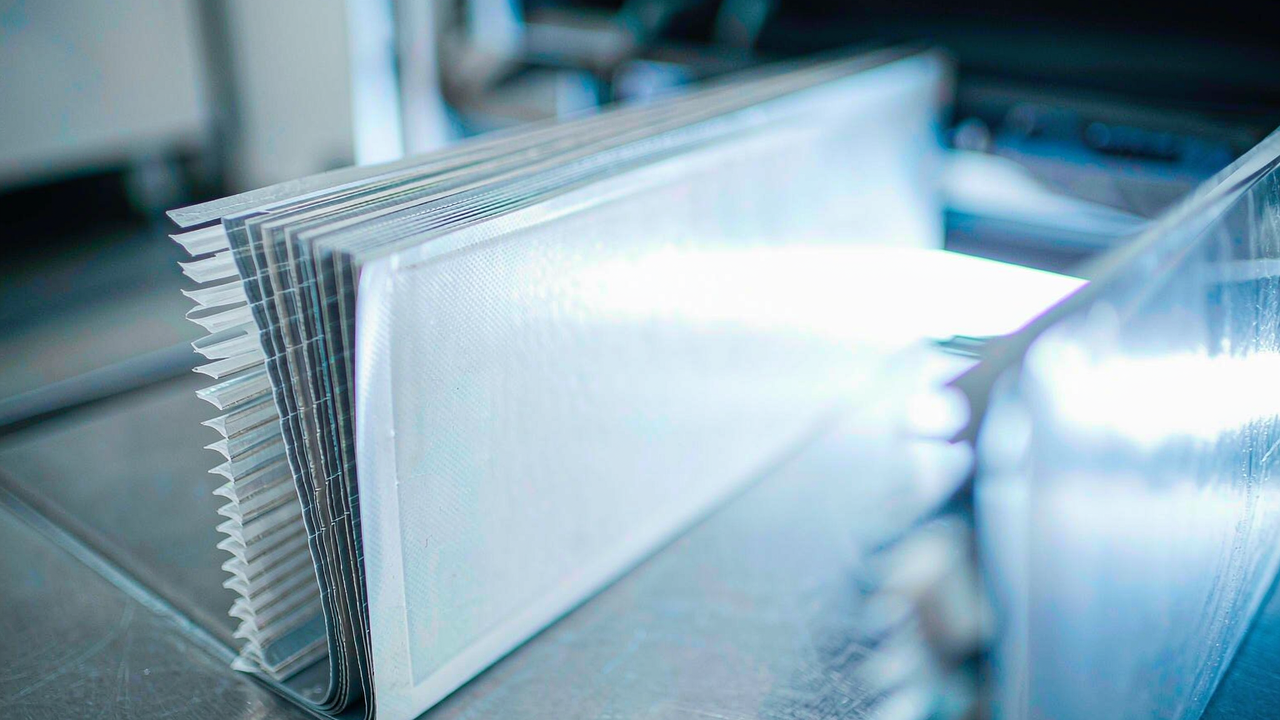
This is where EVA specification gets serious, because the film sits between glass and the solar cell for 25+ years. Encapsulant EVA is usually 28–33% VA with a controlled MFR (often 20–35 g/10 min) and a precisely formulated additive package: a crosslinking peroxide, a silane or organosilicon adhesion promoter, a UV absorber, and a hindered-amine light stabilizer. The three numbers buyers should verify on the COA are VA content, gel content after cure (target ~75–90%, measured by xylene extraction), and optical transmission (≥91%). Two more trends matter in 2026: fast-cure grades that shorten lamination cycles, and POE or EPE (EVA-POE-EVA) co-extruded encapsulants that beat EVA on PID (potential-induced degradation) resistance for bifacial and double-glass modules.
Application deep-dive: crosslinked foam
Foam grades use 15–18% VA with a moderate MFR and are expanded with azodicarbonamide (AC) blowing agent, then crosslinked by compression molding (inline) or irradiation. The properties a buyer actually cares about are Shore C hardness (typically 30–70C), foam density (0.03–0.10 g/cm³), compression set, and tensile/tear strength. Footwear midsoles, yoga mats, and protective padding all live in this band; the VA level sets the springiness, while MFR sets how cleanly the melt fills the mold.
Application deep-dive: hot-melt adhesive & wire/cable
For hot-melt adhesives, high VA (25–40%) delivers the tack and wetting needed to bond paper, film, and wood; formulators blend with wax and tackifier to tune open time and set speed. For wire and cable, the opposite logic applies: low VA (≤10%) plus flame-retardant fillers (ATH, Mg(OH)2) gives a flexible, flame-retardant jacket that still meets UL temperature ratings. Note that high VA is not what you want in cable — the heat resistance is too low.
EVA vs. the alternatives
- EVA vs. POE — POE has no vinyl acetate and no unsaturation, so it resists UV/ozone and PID far better; for double-glass solar and weatherable TPO, POE is often preferred. EVA remains cheaper and easier to process for standard single-glass modules and foam.
- EVA vs. EMAA / EAA — the acrylic-acid copolymers give dramatically stronger adhesion (especially to aluminum and polar surfaces), at a higher price; use them where bond strength, not foamability, is the constraint.
- EVA vs. TPU — TPU wins on abrasion, oil resistance, and higher service temperature, but costs several times more and processes differently; EVA is the value choice for soft, flexible, low-heat parts.
- EVA vs. flexible PVC — EVA is phthalate-free and cleaner for footwear and child-contact goods, which is why it has displaced plastisol PVC in many markets.
How to specify EVA in an RFQ
A vague “send me EVA” will get you a price list, not a solution. A good RFQ states: (1) target VA content (or the application, so the supplier can propose a band), (2) MFR/MI and the test condition, (3) density, (4) end-use and any regulatory gate (RoHS, REACH, FDA food-contact, UL 94 for cable), and (5) packaging and lot-size needs. Ask for the TDS and COA up front, and verify VA by FTIR and MFR on your own incoming QC if the volume is large.
Sourcing notes for overseas buyers
China is the world’s largest EVA producer after capacity waves in coal-to-olefins and refinery integration, with both imported brand grades (Lotte, Hanwha, DuPont, ExxonMobil, Arkema, Bridgestone/Tosoh) and competitive domestic equivalents. Typical MOQs run from a few hundred kilograms for sampled trial lots up to 20–25 kg bags in full FCL; LCL is possible but raises per-kg freight and contamination risk. Insist on COA-per-lot, REACH/RoHS where applicable, and a clear Incoterm (FOB, CIF, or DDP) so landed cost is unambiguous. For solar and cable grades, confirm the additive package and certification trail before committing to a production run.
Bottom line
Treat “EVA” as a family, not a product. Lock the VA band to the application, set MFR to your process, and verify the three or four COA numbers that actually predict performance. Do that, and EVA stays the cheap, capable, endlessly useful copolymer it was designed to be — instead of an expensive recall waiting to happen.
Related reading: Solar Encapsulant Films: EVA vs POE vs EPE compares the three encapsulant routes for photovoltaic modules and the properties that decide between them.
About This Article
This guide is prepared by the POLYVALA technical team. All property values, test methods and compliance statements are drawn from manufacturer Technical Data Sheets (TDS) and recognized standards (ASTM, ISO). Figures must always be confirmed against the current official TDS and the lot-specific Certificate of Analysis (COA) before production qualification.
References
- Manufacturer Technical Data Sheets (TDS) for the grades referenced above.
- ASTM D1238 / ISO 1133 — Melt flow rate (MFR/MFR) of thermoplastics.
- ASTM D1505 / ISO 1183 — Density of plastics by the density-gradient technique.
- ASTM D638 — Tensile properties of plastics.
Application case studies