Open almost any polymer datasheet and you hit the same wall: a row of capital letters that assume you already speak the language. EVA. POE. OBC. TPU. TPE. TPV. Buyers who order the wrong one because two abbreviations look alike — or because "TPE" turned out to be three different chemistries — are a recurring source of wasted samples and missed lead times. Consider this your bingo card and decoder in one.
None of these six are random. Five of them are polyolefin or elastomer families; the sixth (TPU) is a polyurethane. They overlap on "soft, flexible, rubbery" but differ wildly in temperature resistance, oil resistance, compression set and price. Get the abbreviation right and the sample comes back right. Get it wrong and you have paid freight on the wrong chemistry.
EVA — Ethylene-Vinyl Acetate
EVA is the workhorse copolymer of ethylene and vinyl acetate. The single number that defines a grade is VA content (typically 5–40%): low-VA grades behave like a flexible polyethylene, high-VA grades get rubbery, sticky and clear. Key uses split by VA:
- Low VA (5–18%): flexible film, stretch cling film, foam-crosslinkable cable jacketing, shoe soles.
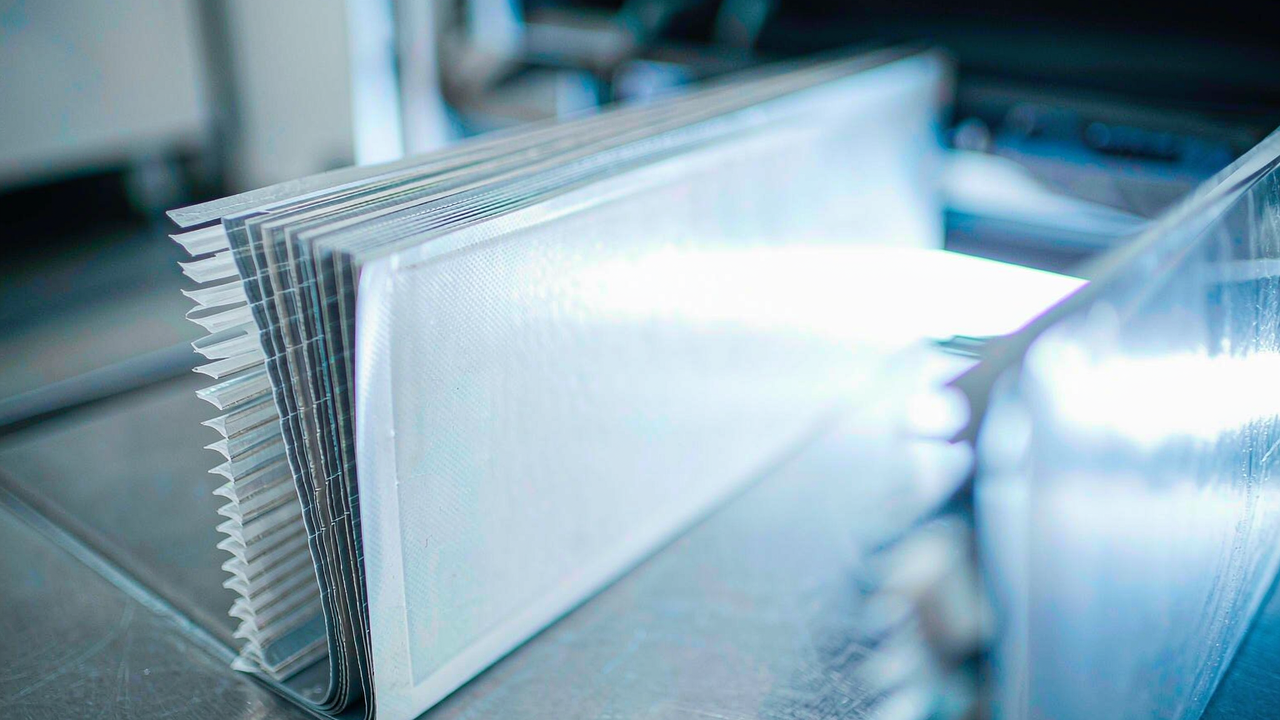
- Mid VA (18–28%): solar cell encapsulant film (the dominant use), hot-melt adhesive base, wire & cable.
- High VA (28–40%): tacky hot-melt adhesives, wax blends, rubber-modified compounds.
Specify EVA by VA content + MFR + whether it must be UV-stabilised (solar) or food-contact grade. See our full EVA grades selection guide.
POE — Polyolefin Elastomer
POE is an ethylene-/alpha-olefin (usually octene or butene) copolymer made with metallocene catalysts, giving a rubbery, amorphous ethylene-rich chain with no crystallinity to speak of. It is not a "rubber" you vulcanise; it is a thermoplastic you melt and process like a polyolefin. Its superpower is toughness at low temperature and easy blending:
- Impact modifier for PP and PE (just dry-blend in).
- Foam for shoe midsoles and automotive interior.
- Crosslinkable wire & cable insulation and jacketing.
- Flexible film and sealant layers.
Because it is metallocene-based, POE grades are specified by density, MFR and octene vs. butene comonomer. Our POE elastomers guide walks the selection.
OBC — Olefin Block Copolymer
OBC is the sharper cousin of POE. Where POE is a random copolymer, OBC has hard ethylene-rich blocks alternating with soft amorphous blocks — a built-in "hard-soft-hard" architecture that behaves a bit like a thermoplastic vulcanizate but is a simple polyolefin to process. The payoff:
- Higher continuous-use temperature than standard POE.
- Much better compression set (holds shape under sustained load).
- Good rebound and soft-touch feel.
Use OBC where a POE would relax or creep — soft-touch overmoulding, gaskets under constant squeeze, high-temp foam. It costs more than POE, so it is a targeted upgrade, not a blanket replacement.
TPU — Thermoplastic Polyurethane
TPU is the odd one out here chemically: a polyurethane, built from a soft polyester or polyether segment plus a hard urethane segment. That architecture gives it a property set the polyolefins cannot match:
- Excellent abrasion and tear resistance.
- Oil, grease and many solvent resistance.
- High mechanical toughness across a wide hardness range (60A–75D).
- Transparency and good low-temperature flexibility.
Typical uses: cable jacketing, films, tubing, phone-case shells, skate wheels, industrial rollers. The main trade-offs are higher price and moisture sensitivity during processing (TPU must be dried). Specify by polyester vs. polyether base, hardness and whether it needs flame retardancy.
TPE — Thermoplastic Elastomer (the umbrella, not a chemistry)
This is the abbreviation that trips people up. TPE is a category, not a single material. It covers any thermoplastic that feels rubbery, including SEBS-based compounds, TPV, TPO, and copolyester (COPE) elastomers. When a buyer says "I need a TPE," the follow-up question is always "which TPE?" because the property spread inside the family is enormous — from cheap TPO bumper fascia to oil-resistant SEBS gaskets to high-temp COPE.
Rule of thumb: if a supplier quotes "TPE" with no sub-type, ask for the base polymer before you order.
TPV — Thermoplastic Vulcanizate
TPV is the premium end of the TPE family and the closest thing to real rubber you can injection-mould. It is made by dynamically vulcanising (crosslinking) fine EPDM rubber particles inside a polypropylene matrix. The rubber phase is fully cured, so TPV keeps rubber's best traits while processing like a plastic:
- Excellent heat resistance (continuous ~100–125°C, above most TPE).
- Superior compression set and weathering vs. TPO/SEBS.
- Good chemical and ozone resistance.
That is why TPV owns weatherseals, automotive gaskets, glazing seals and appliance door gaskets. It costs more than TPO but outlasts it outdoors.
Quick comparison
| Abbreviation | Chemistry | Hardness (typical) | Heat resistance | Standout use |
|---|---|---|---|---|
| EVA | Ethylene-vinyl acetate | Soft – semi-rigid | Low–moderate | Solar encapsulant, hot-melt adhesive |
| POE | Ethylene / alpha-olefin (metallocene) | Very soft – rubbery | Low–moderate | PP/PE impact modifier, foam |
| OBC | Olefin block copolymer | Soft – mid | Moderate–good | Soft-touch, gaskets under load |
| TPU | Thermoplastic polyurethane | 60A – 75D | Moderate–good | Abrasion/oil-resistant film & cable |
| TPE | Family (SEBS/TPO/TPV/COPE…) | Wide | Varies by sub-type | Soft-touch overmoulding (specify base!) |
| TPV | Vulcanised EPDM in PP | Soft – mid | Good (to ~125°C) | Weatherseals, automotive gaskets |
Which one do you actually need?
- Need a cheap, flexible film or solar encapsulant? → EVA, set by VA content.
- Need to make rigid PP/PE tougher or a soft foam? → POE, or OBC if heat/compression set matters.
- Need abrasion and oil resistance? → TPU.
- Need a rubbery seal that survives years outdoors? → TPV (say "TPV", not just "TPE").
- Someone said "TPE"? → Ask which base polymer before quoting or sampling.
Why the abbreviations matter for sourcing
A wrong abbreviation in an RFQ multiplies through the whole chain: the supplier quotes the wrong chemistry, the sample is moulded, the part fails, and everyone blames the material. One line clarifying "TPV (EPDM/PP), 70A, black, UV-stable" saves more time than a paragraph of description. For the adhesive side of multilayer structures, our EAA/EMAA guide covers the tie-layer resins that make these flexible structures actually bond.
Sourcing these resins through POLYVALA
POLYVALA stocks and sources the polyolefin and elastomer families above — EVA across the VA window, POE and OBC impact modifiers, TPU, and TPV weatherseal grades — with COA, samples and grade-matching before any volume commitment. If your RFQ says "TPE" and you are not sure which sub-type fits the application, send us the end use and we will narrow it to the right chemistry and hardness.
Related reading: TPU vs TPE vs TPV: Picking the Right Thermoplastic Elastomer compares the three thermoplastic elastomer families and where each one fits.
Related Products
- Dow ENGAGE 8150 (POE elastomer)
- Kuraray E105B (EVOH)
- Dow Bynel 21E787 (tie-layer)
- TOPAS 5013F-04 (COC)
- ZEON ZEONEX 690R (COP)
- Dow 1601 Surlyn (ionomer)
- SK Chemical 3004 PRIMACOR (EAA)
- SK Chemical 29MA03T LOTRYL (EMA)
About This Article
This guide is prepared by the POLYVALA technical team. All property values, test methods and compliance statements are drawn from manufacturer Technical Data Sheets (TDS) and recognized standards (ASTM, ISO). Figures must always be confirmed against the current official TDS and the lot-specific Certificate of Analysis (COA) before production qualification.
References
- Manufacturer Technical Data Sheets (TDS) for the grades referenced above.
- ASTM D1238 / ISO 1133 — Melt flow rate (MFR/MFR) of thermoplastics.
- ASTM D1505 / ISO 1183 — Density of plastics by the density-gradient technique.
- ASTM D638 — Tensile properties of plastics.
Related reading
Application case studies