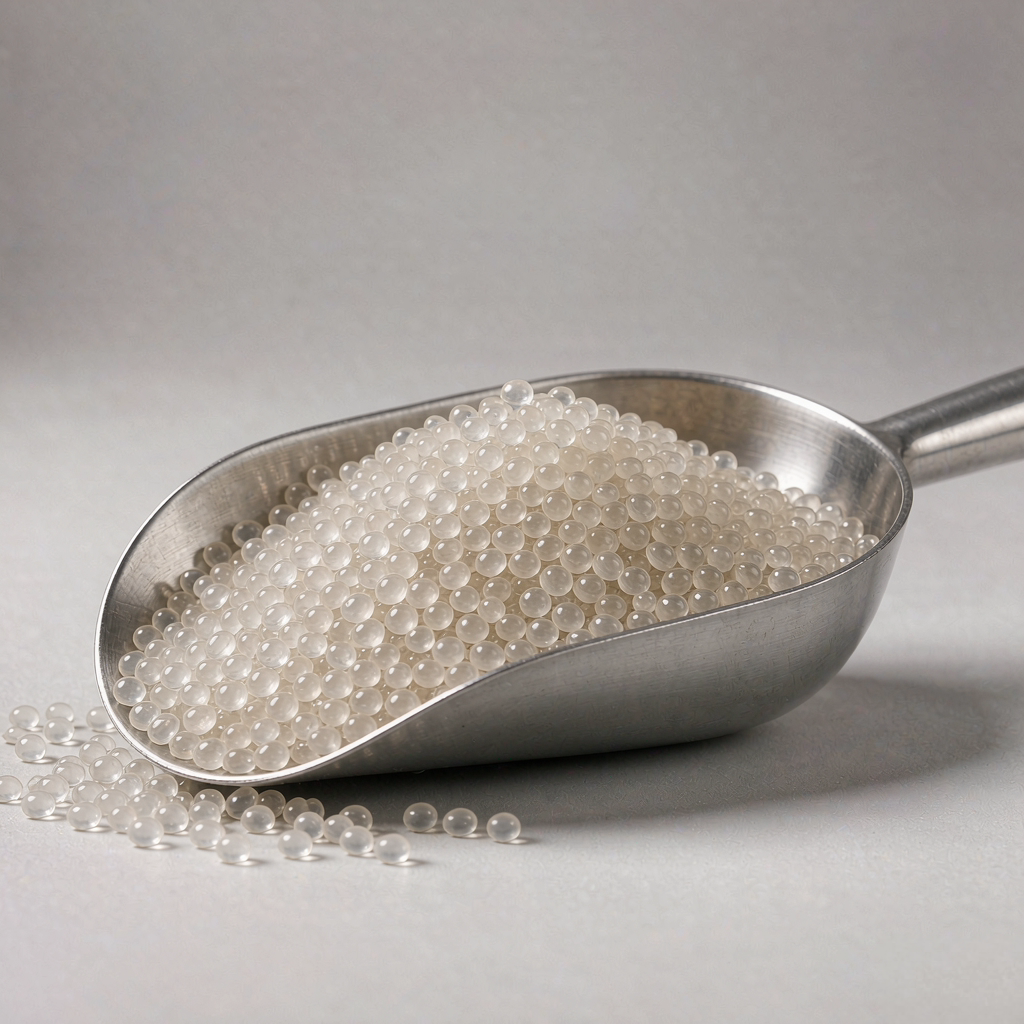
Polyolefin elastomers (POE) are ethylene-based, metallocene-catalyzed copolymers that combine the processability of polyolefins with rubber-like elasticity. They sit in the gap between rigid polypropylene and thermoplastic vulcanizates: soft enough to flex and absorb impact, stiff enough to run through standard extrusion and injection tooling. For compounders and converters, that balance is what makes POE the default workhorse for TPO automotive parts, footwear foam, photovoltaic encapsulant film, and flexible wire-and-cable insulation.
What a POE actually is
A POE is built from ethylene plus a short-chain α-olefin comonomer — usually 1-octene or 1-butene — polymerized with a single-site (metallocene) catalyst. The comonomer interrupts crystallinity, so unlike HDPE or PP the chain never fully packs. The result is a material with:
- Density in the 0.86–0.91 g/cm³ range — lighter than most rubbers and lighter than EPDM.
- Low glass-transition temperature (often below −50°C), so it stays flexible in the cold.
- High clarity and low extractables compared with peroxide-cured elastomers.
- No diene unsaturation, which is why POE resists ozone and UV far better than EPDM in many exposures.
Commercial families you will meet include Dow ENGAGE® and AFFINITY™, ExxonMobil EXACT™ and Vistamaxx™, Mitsui TAFMER™, SK LCY's SOLUMER®, and a growing set of domestic China grades. The grade name tells you almost nothing by itself — selection comes down to the parameters below.
1. Automotive TPO compounds
The largest POE outlet is toughening polypropylene for exterior and interior automotive parts. A typical bumper or cladding compound blends 10–25% POE into a PP homo- or copolymer. The POE phase absorbs impact energy at −30°C without the heavy weight penalty of rubber and without the blooming you get from some elastomer modifiers.
- Bumper fascias & claddings: POE-modified TPO holds its shape after painting and survives parking-lot impacts.
- Interior trim: low-odor, low-fog grades meet cabin air-quality specs.
- Weather seals & gaskets: UV-stable POE replaces denser rubber in non-pressurized seals.
For TPO you generally want a medium-MFR octene-type POE with good dispersion; overly high MFR lowers the low-temperature dart impact.
2. Footwear and sport-foam
Cross-linked POE foam is the quiet replacement for EVA in midsoles, insoles, and yoga/camping mats. It foams to lower density, springs back better after compression, and does not stiffen as fast in the cold. Brands chasing lightweight, high-rebound midsoles run POE blends at 30–60% of the foam recipe.
- Higher rebound than EVA at equal hardness.
- Lower compression set — the foam "remembers" its shape longer.
- Heat-moldable for orthopedic and custom-fit inserts.
Foaming grades are chosen by MFR and comonomer: higher octene gives a softer hand, while MFR controls cell structure during chemical or irradiation cross-linking.
3. Photovoltaic encapsulant film
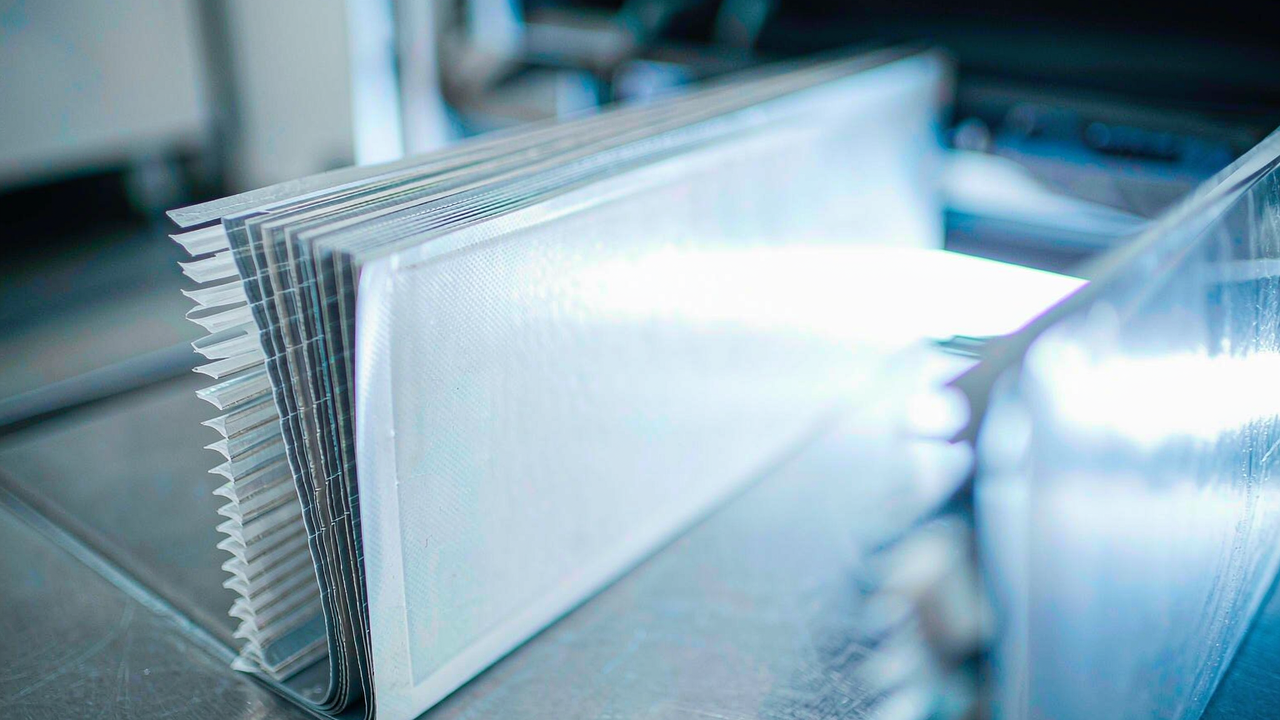
This is the fastest-growing POE application. In bifacial and large-format solar modules, a POE-based encapsulant film replaces or supplements EVA because it blocks moisture and resists potential-induced degradation (PID) far better. A POE encapsulant keeps water vapor out of the sensitive cell stack and stays optically clear for the module's 25-year life.
- Low water-vapor transmission protects cell metallization.
- No acetate byproduct — avoids the acetic-acid corrosion EVA can release.
- Stable adhesion to glass and backsheet through thermal cycling.
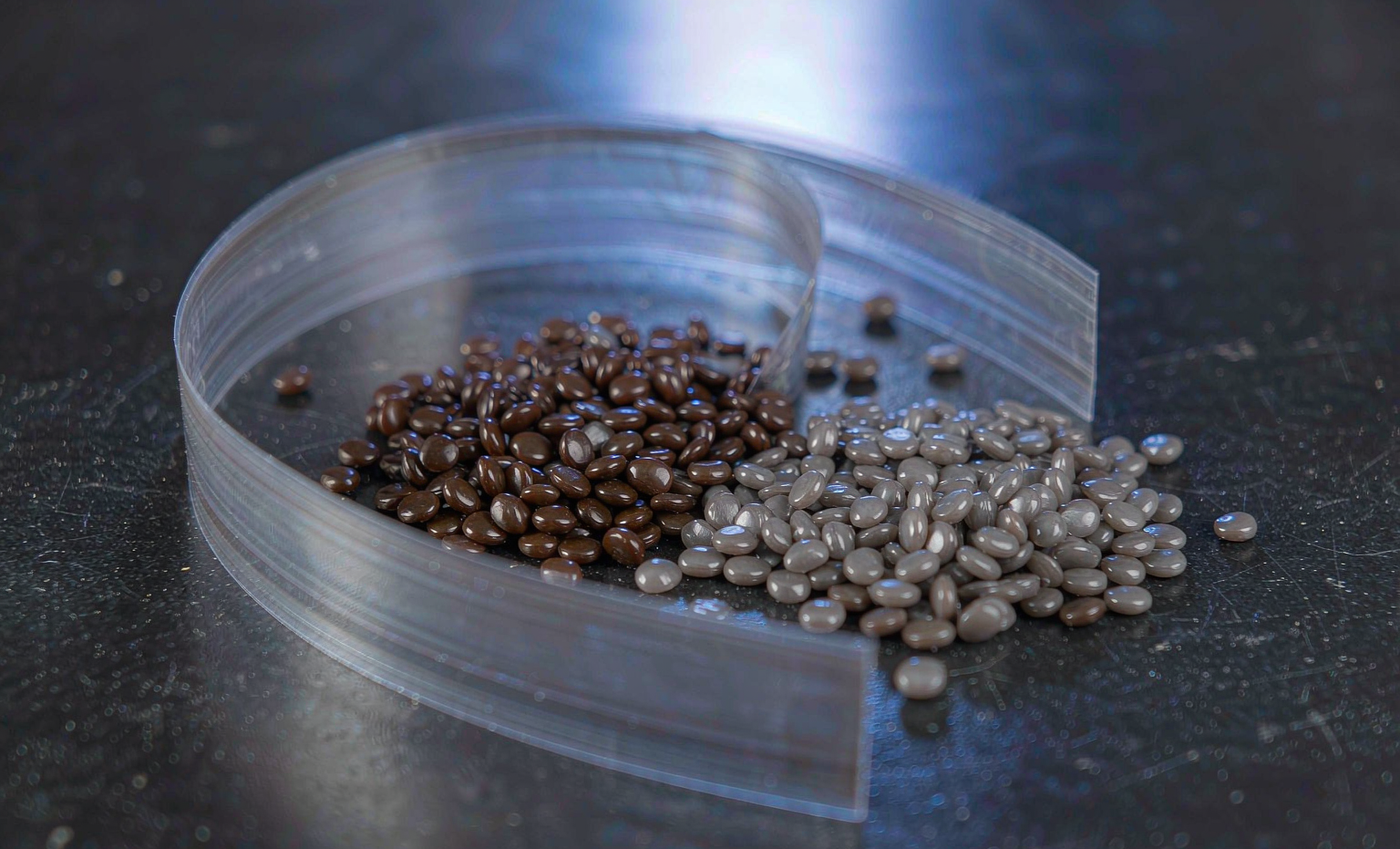
Encapsulant grades are ultra-clean, controlled-MFR copolymers supplied as film-ready resin; color and gel content are tightly specified by the film converter.
4. Wire, cable & flexible profiles
Cross-linkable POE is widely used as insulation and jacket compound for low-voltage cable, photovoltaic ribbon, and appliance cord. It brings flexibility, tracking resistance, and weatherability that PVC cannot match, and it processes on standard silane- or radiation-cross-link lines.
- Flexible cords & EV charging cable: low-temperature flexibility without plasticizer migration.
- Photovoltaic string insulation: UV and heat stable in rooftop exposure.
- Profile gaskets: extruded seals for windows and appliances.
How to select a POE grade
Do not start from the trade name. Start from four numbers:
- Melt flow rate (MFR, g/10 min): sets whether the grade suits extrusion (low MFR, 0.5–5), injection molding (mid, 5–30), or masterbatch/foam (higher).
- Comonomer type: 1-octene grades are softer and more elastic; 1-butene grades are more economical and slightly stiffer.
- Density: lower density = softer and more flexible; higher density = more body and stiffness.
- Ethylene / crystallinity balance: drives the Shore hardness and the low-temperature limit you can specify to.
Match the grade to the process first (can your equipment melt and disperse it?), then to the end-property window (impact at −30°C, hardness, clarity). A grade perfect for TPO bumper may be wrong for foam and unusable for encapsulant film.
Sourcing POE through POLYVALA
POLYVALA stocks and sources the major POE families — ENGAGE®, AFFINITY™, EXACT™, Vistamaxx™, TAFMER™, SOLUMER® and comparable domestic grades — across the MFR and density ranges these applications need. If you know the property window but not the exact grade, send the target MFR, density, and application and we will match a stocked or equivalent grade, with COA and samples before any volume commitment.
For the comparison angle, see our earlier guide on POE vs. EPDM as a TPO impact modifier, and for barrier film contexts our EVOH grades explainer.
Related reading: TPU vs TPE vs TPV: Picking the Right Thermoplastic Elastomer compares the three thermoplastic elastomer families and where each one fits.
Related reading: for a photovoltaic-specific comparison of polyolefin elastomer, EVA and co-extruded EPE encapsulants, see Solar Encapsulant Films: EVA vs POE vs EPE.
Related Products
- Dow ENGAGE 8150 (POE elastomer)
- Mitsui TAFMER A-4050S (POE)
- SABIC FORTIFY C0570 (POE)
- LG Chem LUCENE LC670 (POE)
- ExxonMobil Exact 5171 (plastomer)
About This Article
This guide is prepared by the POLYVALA technical team. All property values, test methods and compliance statements are drawn from manufacturer Technical Data Sheets (TDS) and recognized standards (ASTM, ISO). Figures must always be confirmed against the current official TDS and the lot-specific Certificate of Analysis (COA) before production qualification.
References
- Manufacturer Technical Data Sheets (TDS) for the grades referenced above.
- ASTM D1238 / ISO 1133 — Melt flow rate (MFR/MFR) of thermoplastics.
- ASTM D1505 / ISO 1183 — Density of plastics by the density-gradient technique.
- ASTM D638 — Tensile properties of plastics.
Related reading
For a five-brand POE comparison — Dow ENGAGE, ExxonMobil Exact, Mitsui TAFMER, Borealis Queo and LG Chem LUCENE — see our POE Grade Map.