What a tie-layer compound actually does
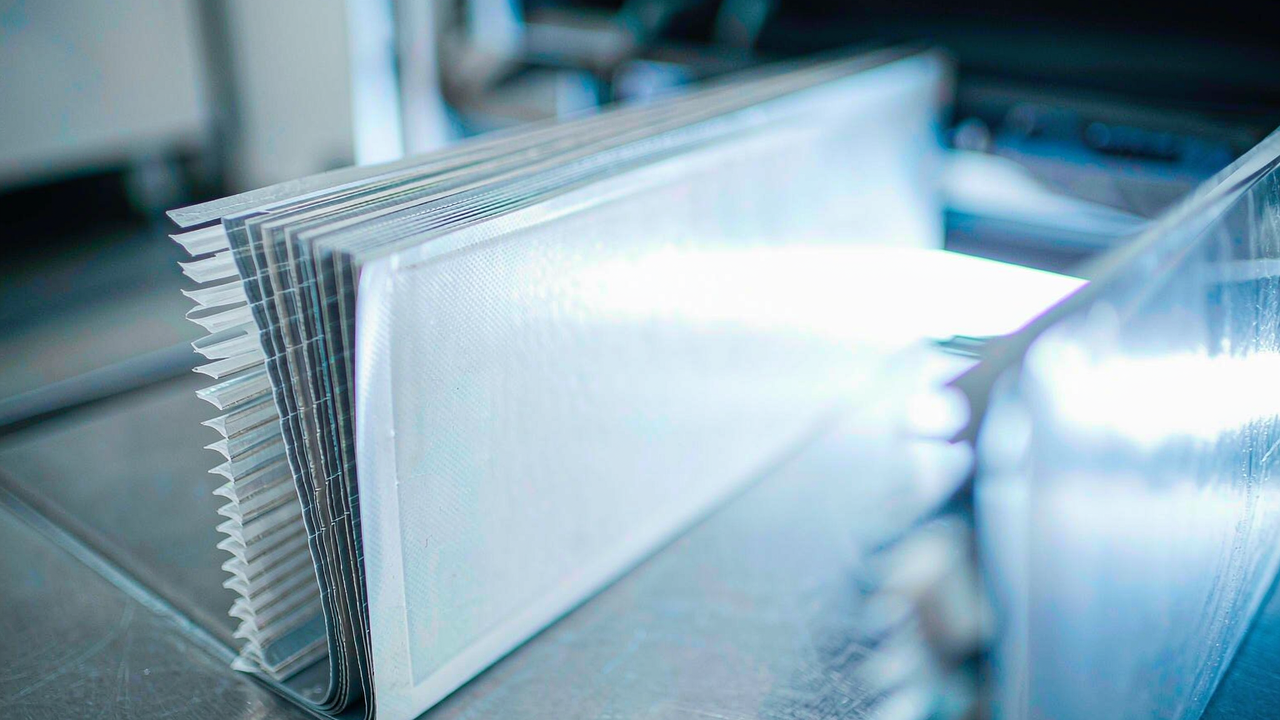
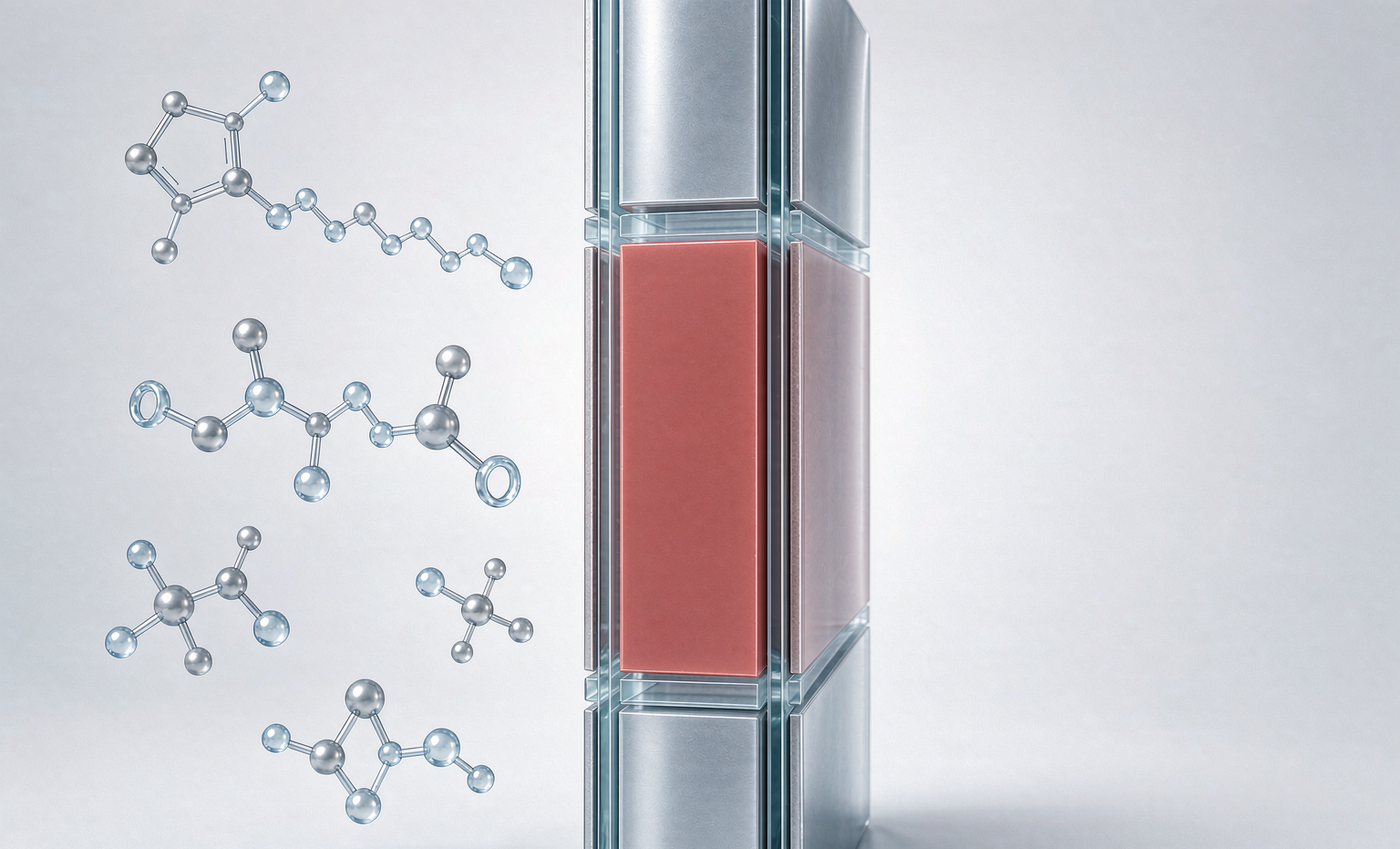
A converter calls with a familiar problem: "Our PE / EVOH / PE barrier film looked fine off the die, but after aging the pouch splits right at the EVOH interface." Nine times out of ten the film was never designed to stick to itself. Polyolefins (PE, PP) are non-polar and chemically inert; EVOH, PA, and aluminium are polar. Sandwich them with no adhesive and the line is held together by nothing but hope. A tie-layer (adhesive) resin is the thin, usually 5–15% of the structure, functional layer whose job is to bond a non-polar polyolefin to a polar substrate so the laminate survives thermoforming, retorting, and drop tests.
The mistake most specifiers make is treating "tie layer" as a single material. It is not. The three workhorse chemistries — PE-g-MAH, PP-g-MAH, and EAA / EMAA — behave very differently once they hit a real screw and a real barrier layer. Pick on price alone and you buy a delamination complaint.
The three families: PE-g-MAH, PP-g-MAH, EAA
All three create adhesion through polarity, but the mechanism and the temperature window are not the same.
PE-g-MAH (polyethylene grafted with maleic anhydride)
PE-g-MAH keeps the processability of LDPE/LLDPE while the grafted maleic-anhydride groups react with polar groups on EVOH or PA during coextrusion. It is the default choice for PE-side structures (PE / tie / EVOH / tie / PE). Because the backbone is PE, it seals and draws like the rest of the polyolefin layer, which keeps the blown- or cast-film line stable.
PP-g-MAH (polypropylene grafted with maleic anhydride)
PP-g-MAH is the analogue for PP-side structures (PP / tie / EVOH / tie / PP, or PP / PA). Its PP backbone matches the PP sealing and stiffness layer, so it is preferred when the outer web is polypropylene rather than polyethylene. Note that PP-g-MAH and PE-g-MAH are not interchangeable: dropping a PE-g-MAH into a PP structure can depress the heat-deflection and seal-initiation window of the whole web.
EAA / EMAA (ethylene-acrylic acid / ethylene-methacrylic acid)
EAA and its methacrylic-acid sibling EMAA are copolymers, not grafted polyolefins. The acid groups give strong adhesion to aluminium, ionomers, and (at the right ethylene content) to EVOH and PA, with excellent optical clarity and low gel. They are the go-to for extrusion-coating and aluminium-based structures and for films where you cannot tolerate the haze that a heavy grafted layer can introduce. The trade-off is a lower continuous-use temperature ceiling than a grafted polyolefin and sensitivity to cure conditions.
Real grade data — what the datasheets say
The table below uses measured values pulled from the grades we stock. Where a manufacturer publishes only a qualitative description (no density / MFR on the spec sheet), the cell is left as "–" rather than estimated. Always confirm against the current TDS and your COA before qualification.
| Grade | Chemistry | Density (g/cm³) | MFR (g/10 min) | Melting (°C) | Tensile (MPa) | Elong. (%) | Typical anchor pair |
|---|---|---|---|---|---|---|---|
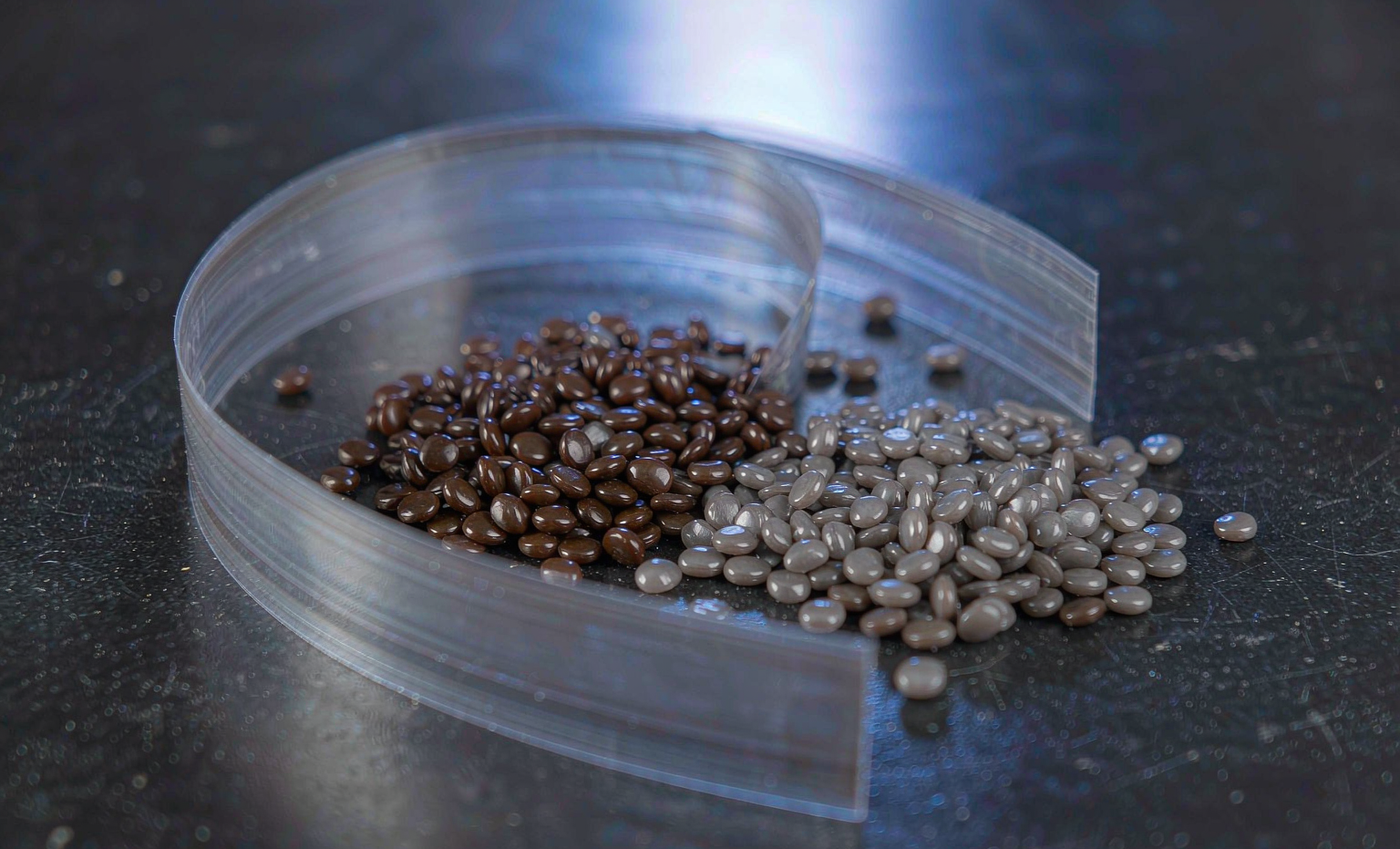
| SK OREVAC 18211 | EAA | 0.95 | 3.5 @ 190 °C / 2.16 kg | 75 | – | – | PE / EVOH |
| SK OREVAC 18300 | EAA | 0.91 | 2.3 @ 190 °C / 2.16 kg | 120 | – | – | PA / EVOH |
| SK OREVAC 18342N | EAA | 0.93 | 3.5 @ 190 °C / 2.16 kg | 125 | 20 | 600 | EVOH / PA |
| SK BONDINE HX8290 | PE-g-MAH | 0.94 | 70 @ 190 °C / 2.16 kg | 85 | 6 | 700 | PE / PA, PE / EVOH |
| SK BONDINE LX4110 | PE-g-MAH | 0.94 | 5 @ 190 °C / 2.16 kg | 105 | 11 | 650 | PE / PA |
| SK OREVAC 18507 | HDPE-g-MAH | – | – | – | – | – | LSZH cable (PE / Al) |
| SK LOTADER 3430 | EBA / acrylic terpolymer | – | – | – | – | – | Al / BOPP |
| Sumitomo IGETABOND BF-7L | E-GMA-MA | – | – | – | – | – | PPS / PBT (engineering) |
Source: manufacturer technical data sheets for the listed grades. Density per ISO 1183-1; MFR per ISO 1133-1 (condition noted). Grades without published density / MFR on the spec sheet are shown as "–" — request the COA for lot-specific values.
Choosing by substrate pair and process
The fastest correct decision is substrate-first, not chemistry-first.
- PE / EVOH / PE (blown or cast) → a PE-g-MAH such as BONDINE LX4110 (lower MFR, easier draw) or BONDINE HX8290 for high-line-speed coating. EAA grades like OREVAC 18211 also work and add clarity.
- PP / EVOH / PP → move to a PP-g-MAH; do not substitute PE-g-MAH if the web must hold PP stiffness and seal window.
- PA-containing structures → OREVAC 18300 (PA / EVOH) or OREVAC 18342N (EVOH / PA) are tuned for the PA interface; BONDINE HX8290 / LX4110 also anchor PE / PA.
- Aluminium or BOPP extrusion coating → LOTADER 3430 or an EAA; these wet aluminium far better than a grafted polyolefin.
- Engineering-resin overmold (PPS / PBT) → an E-GMA-MA impact-modifier / compatibilizer such as IGETABOND BF-7L.
For a full list of in-stock adhesives across all substrate pairs, see the Tie-Layer & Compatibilizers hub. If you are new to the category, start with What Is a Tie-Layer Resin and the EAA / EMAA adhesive guide.
Common mis-selection mistakes
- Buying on MFR alone. A high-MFR PE-g-MAH (e.g. HX8290 at 70) is a coating-grade, not a blown-film primary layer. Forgiving draw on a 3-layer blown line usually needs the lower-MFR LX4110.
- Mixing PP-g-MAH into a PE web. It runs, but you lose seal-initiation control and can haze the film.
- Assuming EAA replaces a grafted tie 1:1. EAA adheres aluminium and ionomer beautifully but its temperature ceiling and modulus differ; requalify the structure, don't just swap.
- Forgetting the tie-layer thickness. Too thin and you under-bond; too thick and you add cost and can nucleate gels. 5–15% of the structure is the usual starting window, then optimize on the actual line.
Buyer's RFQ checklist
Send your supplier at least this, and you will get a usable recommendation instead of a catalog dump:
- Outer and inner web resins (PE / PP / PA / PET) and their melt temperatures.
- Barrier layer and target OTR / WVTR.
- Process: blown vs cast coextrusion, or extrusion coating; line speed.
- Thermal history: will the pouch be retorted, hot-filled, or frozen?
- Clarity / haze requirement and any regulatory window (food contact, EU PPWR recyclability targets).
- Target tie-layer thickness as % of total gauge.
FAQ
Can I use one tie grade for every structure?
No. The anchor chemistry has to match the polyolefin backbone (PE vs PP) and the polar partner (EVOH, PA, Al). A single PE-g-MAH will not correctly serve a PP web or an aluminium-coating line.
PE-g-MAH or EAA for a PE / EVOH / PE film?
Either can work. PE-g-MAH (e.g. BONDINE LX4110) keeps the line most "polyolefin-like" and stable; EAA (e.g. OREVAC 18211) gives clearer film and strong EVOH bonding. Choose EAA when clarity or an aluminium tie-in is also in play.
Why is MFR so different between grades?
MFR tracks process role. Coating grades run high (HX8290 at 70) for thin, fast extrusion; film-grade ties run low (LX4110 at 5) for stable bubble or cast web formation. Match MFR to the line, not to a generic "higher is better" assumption.
Do I need a separate tie for retort?
Retort adds a thermal cycle that stresses the interface. Confirm the chosen grade's thermal window against your retort profile; several EAA and PE-g-MAH grades here are used in retort structures, but qualification on your exact stack is non-negotiable.
References
- ASTM F1306 — Standard Test Method for Slow Rate Penetration Resistance of Flexible Barrier Films.
- ISO 1133-1:2022 — Plastics — Determination of the melt mass-flow rate (MFR) and melt volume-flow rate (MVR).
- ISO 1183-1 — Plastics — Methods for determining density of non-cellular plastics.
- SK Chemicals, OREVAC® and BONDINE® technical data sheets (grades 18211, 18300, 18342N, HX8290, LX4110).
- EU Regulation (EU) 2025/40 (Packaging and Packaging Waste Regulation, PPWR) — EUR-Lex.
About this article
Written by the technical team at Shanghai Polyvala Plastics, a sourcing and compounding partner for barrier-film converters since 2013. We qualify tie-layer and compatibilizer grades against real coextrusion lines, not just datasheets. Questions about your specific structure? Request the TDS and COA for any grade linked above, or contact our application engineers for a line-specific recommendation.
Related reading: Surlyn Ionomer Grade Map: Sodium vs Zinc Resins — 12 ionomer grades with published density, MFR, melting point and Vicat values.