“It passes the test but it feels soft” is one of the most common reports on a toughened PP part, and the most common response is to change the grade. Sometimes the grade is the problem. More often it is the loading, the dispersion, or the fact that the person touching the part is bending a clip whose geometry does the same job as a much stiffer section elsewhere.
The situation
The drop test result is in the acceptable window, the compounder signs off, and the assembly team picks up the part and says it feels rubbery. A clip does not snap back. A panel bows when it is screwed down. The next trial changes the POE, the result moves a little, and the real cause stays untouched.
A soft-feeling part is a symptom with at least three different mechanisms behind it. They need different fixes, and the first two hours of a troubleshooting exercise should be spent telling them apart rather than swapping resin.
The variables worth writing down
- Flexural modulus of the compound — measured on the actual bar, compared with a real floor, not with the neat PP datasheet.
- Density of the POE in the formulation — it sets how much modulus you lose per percent added.
- Actual loading, including the carrier from any masterbatch — “15%” rarely means 15% once the let-down is calculated.
- Dispersion and flow history — MFR match, screw torque, mixing, and how many thermal cycles the material has seen.
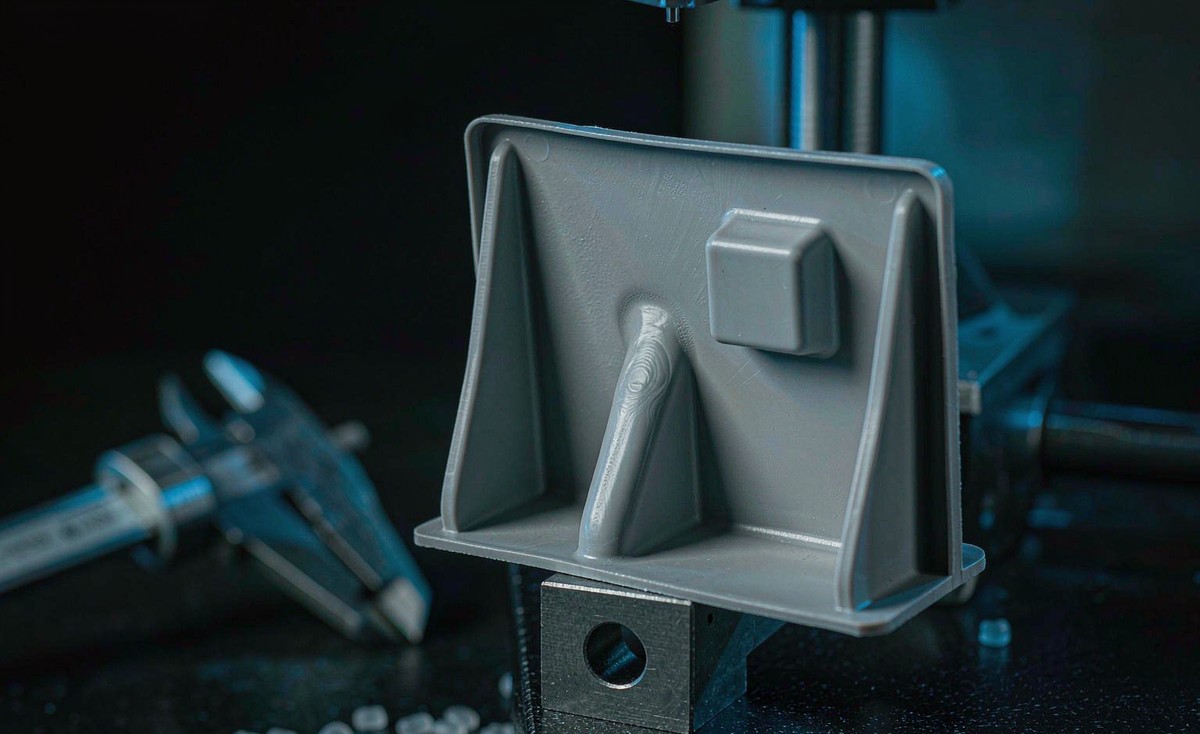
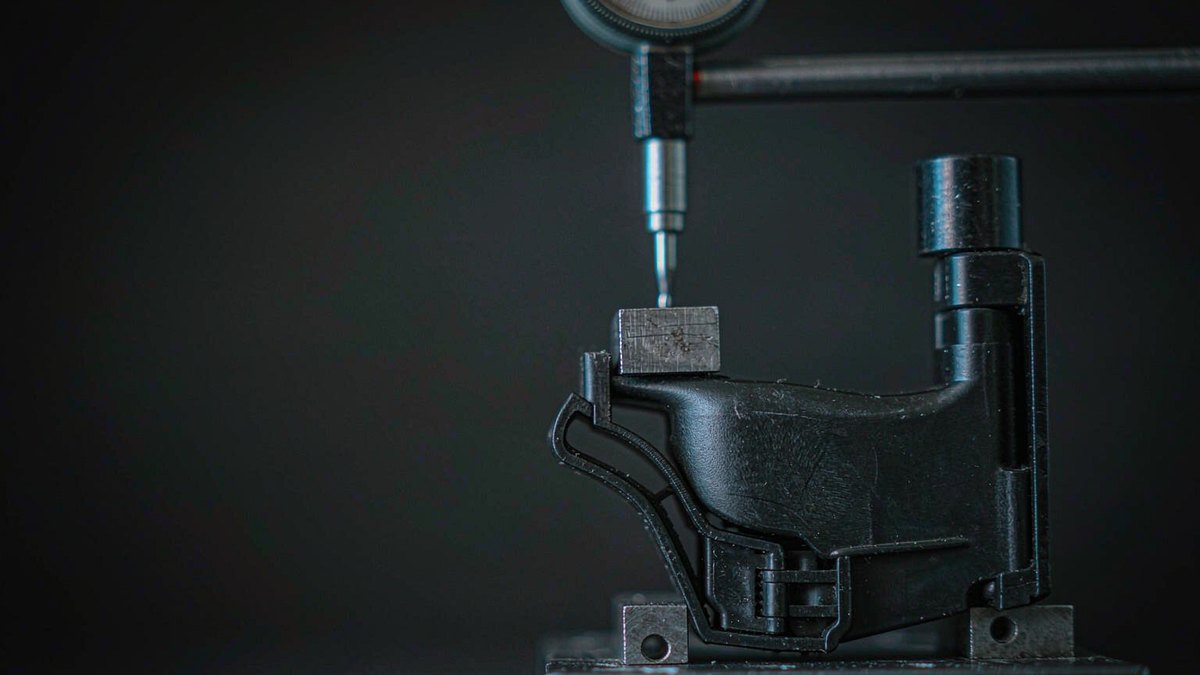
- Where the part is being judged — a thin clip or a weld line can feel soft even when the bulk bar is on spec.
Where the common practice costs you
- Changing grade first. Every grade swap restarts qualification. If the real cause is loading or mixing, you pay for a new trial and learn nothing.
- Adding POE until impact passes, then stopping. Impact usually passes at a loading higher than the stiffness floor allows. The part was never optimised — it was merely made to pass one test.
- Fixing stiffness with filler afterwards. Talc buys modulus cheaply but raises density, hurts low-temperature impact and adds a dispersion step. You end up paying twice: once for elastomer, once for filler to undo its side effect.
- Judging by touch with no reference part. “Feels soft” is a comparison against a previous batch or a competitors' part. Without keeping that part, the observation cannot be quantified.
How we separate the three causes
- Measure before changing anything. Flexural modulus, notched impact at the service temperature, and MFR on a current bar. Keep the old batch as the reference.
- Compare the number on the POE certificate. If the current grade is a low-density octene grade and the part has a stiffness floor, the loss is predictable — this is cause one, and grade selection is genuinely the lever.
- Recalculate loading including masterbatch carrier. A masterbatch let-down miscalculation of a few points is enough to turn an on-spec compound into a soft one. This is cause two.
- Look at variation across the shot. If the bulk bar is fine but the clip or a weld line is soft, the cause is geometry, orientation or dispersion — cause three. Changing grade will not fix a cold weld.
- Only then trial a new grade — and change one variable at a time: density, or MFR, not both.
Diagnostic table
This table is a route through a complaint, not a specification. Numbers are directional and must be checked on your own base resin and equipment.
| What you observe | Likely cause | First check | Direction of the fix |
|---|---|---|---|
| Whole part is soft; modulus below floor; impact has margin | Loading above the stiffness floor | Recalculated loading incl. carrier, flexural modulus | Reduce loading in steps, re-test impact; move up a density band if impact still passes |
| Part is soft and cold impact still fails | Grade too soft for the duty, so loading had to go too high | POE density and comonomer type | A more efficient low-density grade at a lower loading can return modulus and keep impact |
| Softness varies shot to shot; torque or pressure unstable | Dispersion / MFR mismatch / regrind history | MFR of both components, torque trace, regrind level | Fix processing first; consider a higher-MFR grade at the same density |
| Bulk bar on spec, clip or weld line feels soft | Flow path, weld line or section thickness | Gate location, melt and mould temperature, wall thickness | Tool and process change before material change |
Grades to use as references
For a part with a stiffness floor, Dow ENGAGE 8003 (0.885 g/cm³, MFR 1) and Dow ENGAGE 7270 (0.880, butene-based) are the high-density reference points: less toughening per percent, but far less modulus lost.
When the problem is high loading that the line cannot feed or disperse, Dow ENGAGE 8137 (0.864, MFR 13) keeps the same general-purpose density band while making the loading processable. Dow ENGAGE 8157 (0.868, MFR 0.5) is the balanced control grade to compare all three against.
For the logic behind the ranges, see POE loading in PP: why “8%” and “25%” both sound right; for what density is doing underneath, how POE density affects stiffness retention.
FAQ
How much modulus loss is normal when adding POE?
Enough to be measurable at any useful loading, and more at low density. There is no universal acceptable number: the floor comes from the part, not from the elastomer supplier. If you have a deflection limit on a clip, work backward from it.
Can filler restore the stiffness without making the part brittle?
Sometimes, at a cost. Filler raises modulus but also density, and it lowers low-temperature impact. If you need both impact and stiffness, it is usually cheaper to fix the elastomer choice first and use filler only for the remaining gap.
Why does the same compound feel softer in one batch?
First suspect dispersion, regrind level and thermal history, then check whether the masterbatch let-down was calculated the same way. A material change is a late explanation, not a first one.
Does a higher-MFR POE make the part softer?
Not directly. Higher MFR improves feeding and dispersion at high loading; any property change comes from better dispersion, not from the flow number itself. Match density first, then use MFR to solve the process.